
The Drama: Moral Judgments in Intimate Relationships
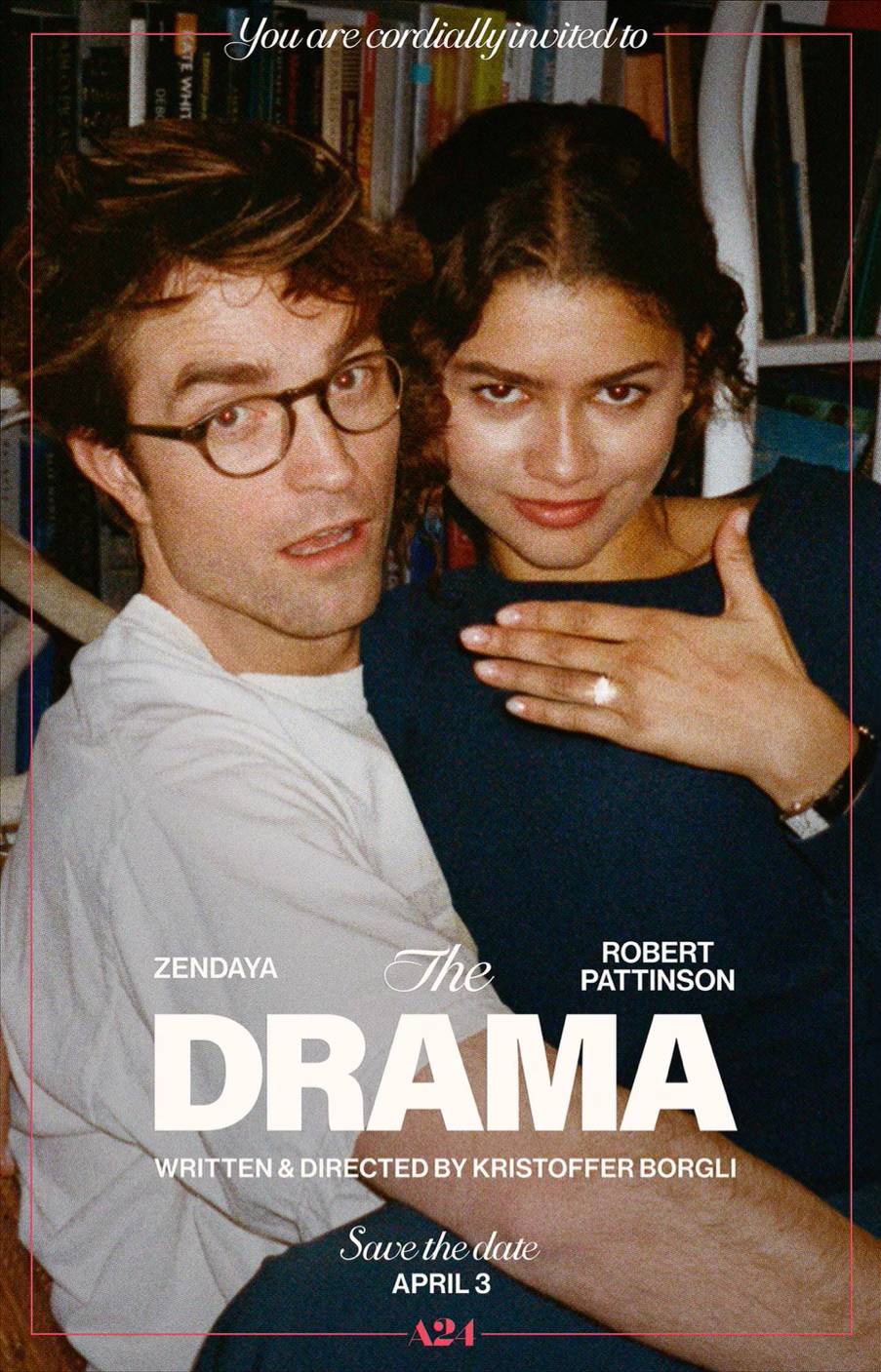
& Moral Judgment in Intimate Relationships
If confession itself is an ultimate test for a relationship, then the question is never whether you have secrets, but whether the trust built between us can still hold once those secrets are spoken aloud.
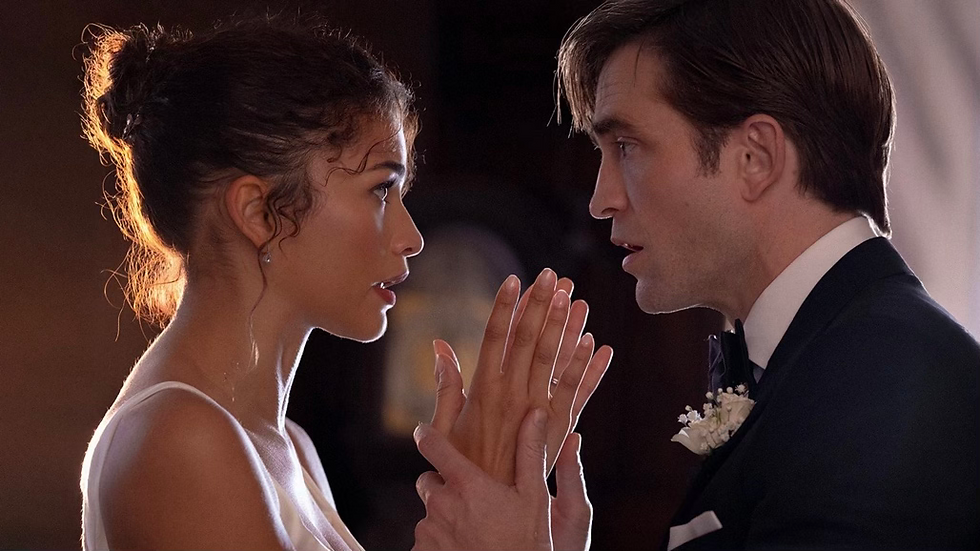
The Drama unfolds with this almost brutal premise. Shortly before their wedding, groom-to-be Charlie Thompson (played by Robert Pattinson) and bride-to-be Emma Harwood (played by Zendaya Coleman) join their friends for a game of self-disclosure fueled by alcohol: each person must share the worst thing they have ever done in their life. What begins as a seemingly frivolous social ritual quickly devolves into a scene of moral judgment.
After their friends take turns making their confessions, Emma’s revelation sends shockwaves through the group. She admits that during her adolescence, she genuinely planned a school shooting and brought a loaded shotgun onto campus. Though she never carried out the act, the mere intent was enough to make her cross an unforgivable line in everyone’s eyes.
It is at this exact moment that the film sharply zeroes in on its central theme.
~Is a "thought" morally equivalent to a "crime"?
In stark contrast stood everyone else present. Their "misdeeds" were not merely hypothetical but had inflicted tangible harm on others:
Michael (played by Mamoudou Athie) once used his ex-girlfriend as a human shield in a dangerous situation, leaving her to be attacked by a rabid dog; Rachel (played by Alana Haim) locked an autistic child in a closet during their childhood and flatly denied doing so when the child’s parents came looking; as for Charlie himself, he bullied a classmate relentlessly throughout middle school, to such an extreme degree that the victim’s family was forced to move out of town.
Violence, deception, bullying. These acts left verifiable trauma in reality, yet they were downplayed and trivialized in the narrative. By comparison, Emma, the only person who had never harmed anyone, was hastily placed on a moral pedestal to face the harshest judgment of all.

This imbalance is not accidental but deeply rooted in social structures and emotional mechanisms. Through fragmented depictions of Emma’s past, the film traces a classic trajectory of marginalization in her upbringing. Her ethnic minority status, appearance that deviates from mainstream aesthetic standards, and withdrawn personality made her the "default victim" within bullying dynamics throughout her adolescence.
Yet when she tries to explain all of this, Charlie responds with only: “That’s it?”
This line forms perhaps the sharpest pivot point of the entire film. It not only dismisses Emma’s personal experiences but also exemplifies a statement marked by inherent structural blind spots. Coming from a position never subjected to systemic oppression, it redefines what constitutes suffering.
Evidently, as a white British man, Charlie is fundamentally incapable of truly comprehending Emma’s predicament. He grew up within a social system heavily skewed in his favor; his identity, background, and occupation—as an art curator and museum director based in Boston—have afforded him a comparatively uncomplicated life path. He cannot grasp the cumulative anguish stemming from prolonged marginalization, neglect, and even humiliation.
Nevertheless, Charlie persistently attempts to pinpoint a “more plausible” source of trauma for Emma. He craves a more violent, dramatic, and ostensibly “comprehensible” cause. He requires an extreme enough chain of cause and effect to uphold his understanding of how the world operates. What he refuses to accept is that routine, persistent, micro-level harm can likewise build up to devastating psychological repercussions.
When these conflicting perspectives prove irreconcilable, the rift in their relationship widens irreversibly.
~Narrative Strategies and Emotional Dilemmas
From the perspective of narrative strategy, *Love Drama* carries forward A24’s consistent stylistic leanings. Dense dialogue, jump-cut editing, and slightly unhinged scene orchestration together create a tense space situated between reality and absurdity. While the film is outwardly wrapped in a light comedic tone, unease and a sense of oppression keep simmering beneath its surface.
Different from conventional cult-style expressions, this film centers its conflicts within intimate relationships. It is less concerned with extreme incidents themselves, and more focused on how interpersonal bonds get repeatedly torn between morality and emotion once such incidents are spoken aloud.
For this very reason, the audience’s viewing experience does not hinge on plot progression, but rather resembles a gradual emotional infiltration. Its quarrels, silences and speechlessness feel familiar, even carrying an authentic quality that strikes a chord with viewers.

It is worth noting that the film does not attempt to simply "rehabilitate" Emma. Her thoughts remain dangerous and even extreme. Yet the film also refuses to reduce her to an "abnormal individual" who ought to be cast aside. Instead, it focuses more on how such thoughts take shape within a social structure fraught with latent violence, and how individuals reorient themselves in the aftermath.
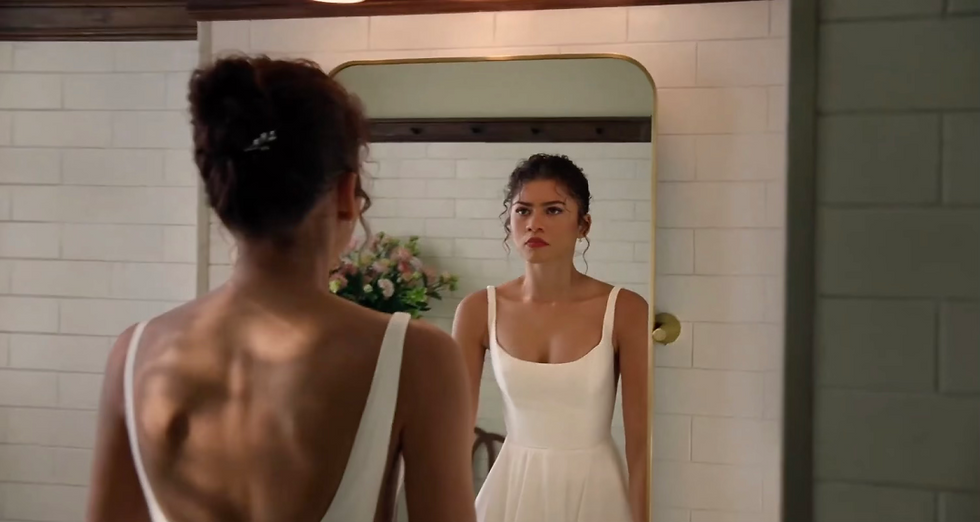
The transformation of the young Emma, who later comes to her senses and devotes herself to gun control advocacy, is not the end of her atonement, but rather an ongoing struggle against her former self. She is both a potential perpetrator and a product of structural harm.
Therefore, what The Drama truly addresses is not the question of "who is more guilty", but a more unsettling inquiry: is our judgment of "evil" grounded in the act itself, or in who we are willing to interpret through the lens of prevailing social morality?
~Conclusion
The Drama offers no definitive answers; it only keeps drawing the audience closer to the core questions themselves.
When a relationship is built upon selective understanding, does honesty paradoxically become a destructive act?
And when we rush to draw moral dividing lines, are we unconsciously repeating patterns of exclusion and violence?
Perhaps the real question is not: “What would I do if I were Emma or Charlie?”
Instead, are we truly judging evil, or using the judgment of others to reassure ourselves that we remain on the morally safe side?
Image Source: Internet
Text Author: L. Lu
Typesetting: Rose
Editor-in-Charge: Lu Xuanlong




Comments