
Updated: Jul 27
Review of The Unbroken: Struck Matches and Things Ignited by Mistake

& The lit match and what was mistakenly ignited
This is a film about matches.
Sukanta Bhattacharya, a Bengali poet, wrote a poem titled Deshlai Kathi. A single matchstick is not enough to burn anything down, yet it carries fire, embodying the tiniest yet most resolute will of a human being. The story of Adamya (The Unbroken) stems directly from this poem.
Twenty-three-year-old Palash is a left-wing revolutionary student in West Bengal. He chooses the gun over the ballot box. He attempts to assassinate a corrupt member of parliament, only to kill an innocent young police officer by mistake. Afterwards, he flees alone into the Sundarbans, the world’s largest mangrove swamp located at the mouth of the Bay of Bengal.
The film bears the English subtitle "The Unbroken", meaning the indomitable one. Nevertheless, the movie refuses to offer any heroic conclusion. Its core inquiry is this: what remains for a young person when he strikes a match only to set fire to something wrong?
^The bullet that went off course^
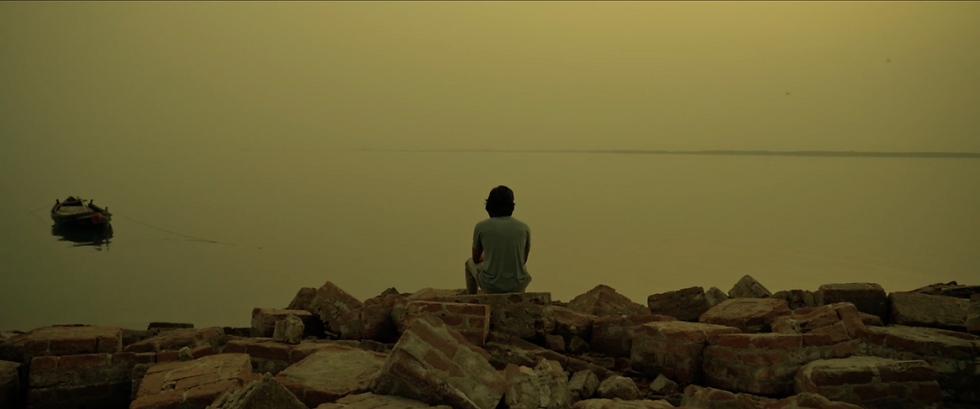
The entire weight of the film rests on a stray bullet.
Palash sets his sights on a local councilor delivering campaign speeches in Hindi rather than Bengali. Seemingly trivial, this detail carries a precise political message: a Bengali councilor who refuses to speak the local language stands guilty of double betrayal—betrayal of his constituents linguistically, and substantive betrayal of the poor he claims to represent. What Palash aims at is not merely this individual, but the symbol he embodies.
Yet when the bullet is fired, it kills a young police officer instead.
The film does not shirk the moral gravity of this incident. The assassinated councilor is a symbol of a corrupt system, and his death might be "justifiable" under a radical line of reasoning. But what of the slain young policeman? He may also have come from an underprivileged background, may have been the only son of some mother, and may have held no genuine allegiance to the corrupt councilor at all—he was simply wearing a uniform and happened to be in the wrong place. The system Palash sought to dismantle poses the sharpest question back to him through this young man’s death: What exactly have you destroyed?
This is not a film glorifying violence. Director Ranjan Ghosh has stated that he seeks to examine "the razor-thin line between legitimate protest and violent anti-state activity." He offers no definitive answers, only draws that line and invites viewers to step onto it and experience it for themselves.
After the botched assassination attempt, Palash flees into the Sundarbans, where the bulk of the film unfolds. He hides inside an abandoned shack overlooking an overgrown pond. Only two things keep him company: himself, and a mobile phone that rings intermittently to deliver cold, curt orders.
This phone is the most chilling prop in the entire movie. Palash acts in the name of a "collective"—the central myth of Naxalism hinges on the belief that a group united in fervor can burn down all oppression. But where is that "collective" now? All that remains are sporadic brief commands coming through the phone. The organization uses him when he is useful, but will that phone still ring once he becomes a liability?

Palash stays alone in the deserted house and begins talking in his head to a deceased comrade-in-arms, someone he may have failed in the past. He thinks of his elderly mother, and how she would lose her only support if the police track him down. He thinks of a woman, and the ordinary life he might once have been able to have.
These inner monologues constitute the quietest yet cruellest moments of the film. The grand rhetoric of revolution fades away entirely here, leaving only a twenty-three-year-old young man sitting on the earthen floor, tallying what he has left—and the answer is very little.
^The camera acts as an intimate attendant to consciousness^
As an experimental single-character film, The Unbroken devotes nearly all of its 110-minute runtime exclusively to Palash. This structural choice yields a concrete practical effect in cinematography: the camera almost never leaves Palash. This creates an exceptionally unique viewing perspective. It is neither an omniscient viewpoint that overlooks everything nor the gaze of an onlooker maintaining a safe distance, but an intimate attachment that seemingly breathes in tandem with the protagonist.
The subtle shakiness inherent to single-camera handheld shooting, paired with visual fluctuations synchronized to the character’s breathing, links the audience’s physical sensations to Palash’s frantic running, crouching and breath-holding. Amid the darkness of a movie theater, this connection unconsciously bypasses rational thinking and directly stimulates the audience’s nervous system.
This embodies an aesthetic of reduction, alongside a strategy that places both trust and demands upon viewers. The sound of tides washing over mudflats, rustling mangrove branches swaying in the wind, chirps of unidentified birds in the distance, and the rhythmic churn of oars stirring murky water—these sounds offer no emotional cues; they simply exist, just like the delta itself.
——It exists indifferently, indifferent to Palash’s fate.
"Living inside Palash’s mind" stands as a fundamental proposition in cinematic storytelling. Literature can directly access a character’s stream of consciousness through first-person narration, whereas film typically depicts characters externally, relying on actors’ facial expressions and body language to hint at inner thoughts.
Yet The Unbroken adopts a more radical approach: using the position and movement of the camera itself to mimic immersive alignment with a character’s consciousness. Instead of telling the audience what Palash is thinking, it places viewers bodily alongside him.

The film shifts the weight of internal conflict away from dialogue and onto the physical body: Palash’s gaze, the curve of his shoulders as he crouches in muddy water, and the faint tremor of his hands at certain moments. This bears a spiritual kinship with the strategy adopted by Carl Theodor Dreyer in The Passion of Joan of Arc, which uses relentless close-ups to close in on characters’ faces. Both works deny the audience emotional breathing room, forcing them into a state of moral engagement. Yet The Unbroken seems to go even further: it draws close not merely to faces, but to the entire body as it moves through space, transmuting the exhaustion and terror of flight into an experience that can be felt rather than merely watched.
^The Delta of Revolution, Youth and Violence^
Fifty-four years ago, Charu Majumdar, the founder of the Naxalite movement, was arrested, putting a bloody end to the armed revolutionary romanticism of an entire generation of young Bengalis. Against this historical backdrop, the narrative of The Unbroken conjures the specter of those angry years in 1970s Kolkata, when the city’s brightest university students romanticized armed insurrection as the sole path to liberation.
Set in the Sundarbans, this delta region inherently carries an eternal dramatic quality: a perpetual struggle between land and water, a dividing line between humans and tigers, and constant tension between state authority and nature. It ranks among one of the world’s last truly ungoverned frontier zones.
State power has never fully permeated this place: tigers wield greater clout than police, and tides exert more force than laws. Placing a political fugitive within this landscape lends Palash’s predicament a cosmic resonance. He is not merely fleeing a specific political system, but standing in opposition to all structures that seek to discipline the individual.

From the perspective of cinematic geography, the Sundarbans serves a dual narrative function. Externally, it acts as a stage for the manhunt: its labyrinthine waterways cut off all linear escape routes, with every bend potentially concealing a trap and every clearing risking exposure.
Internally, it mirrors the protagonist’s inner psyche. The impenetrable canopy corresponds to the unnavigable fog clouding Palash’s mind; the tide-shifting mudflats reflect how once-unshakable convictions warp under pressure; and the shafts of light occasionally piercing through the foliage stand for a faint yet unextinguished will.
The Unbroken is not an outright glorification of violence. On the contrary, the film centers on the protagonist’s psychological journey. Palash is no one-dimensional ideological caricature. He is a young man who embarked on a path driven by certain beliefs, yet is repeatedly forced to question the righteousness of his chosen way amid the mire of reality.
After watching the film, Adoor Gopalakrishnan, the master of Malayalam cinema, proposed an alternative English title for it: The Irrepressible. This detail carries profound implications. The distinction between The Unbroken and The Irrepressible lays bare the core tension within the film’s narrative structure: "unbroken" denotes a completed, verifiable state, while "irrepressible" describes an ongoing, unfinished verb in perpetual motion.
Viewed in this light, the open-ended narrative of The Unbroken is not a mark of artistic laziness, but an act of rigorous formal integrity. Had Palash’s story been given a definitive ending—whether revolutionary triumph or total ruin—it would have reduced that single match burning alone in the swamp to a metaphor subject to final judgment, a choice the film deliberately rejects.
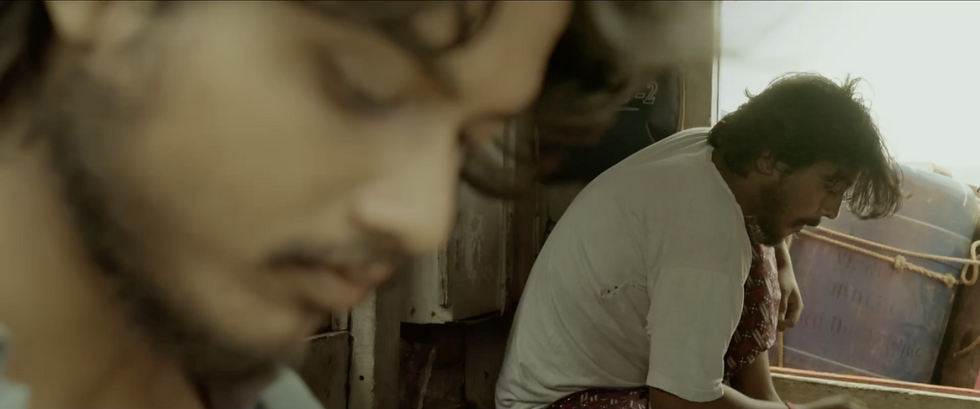
The word "defiance" continues to haunt the audience long after the film ends. Palash achieves no victory, his political ideals remain unfulfilled, and his flight cannot be deemed a success. Yet he is defiant. Is this defiance a form of pride, or a tragedy? Or are the two inherently inseparable?
Palash kills an innocent police officer, hides himself in an abandoned house, holds inner conversations with the deceased, remains surrounded by the world he sought to change through news broadcasts, and encounters his mother and that woman in his memories. He wins nothing, shows no remorse, and undergoes no clear turning point in his mindset—he simply exists there, stuck in the mire, unchanging as himself.
The film examines radicalization, state violence and resistance, yet refuses to offer simplistic moral conclusions or reduce its characters to ideological symbols. It trusts its audience to tolerate such ambiguity and to keep pondering where definitive answers are absent.
A match is capable of burning. The question is never whether it can ignite, but rather: what lingers in the darkness once its flame fades out?
Image source: Internet
Text: Haili
Layout: Liu Ruiyan
Editor-in-Charge: Lu Xuanlong




Comments