
Updated: Jun 18
Review of Signs | Our Home
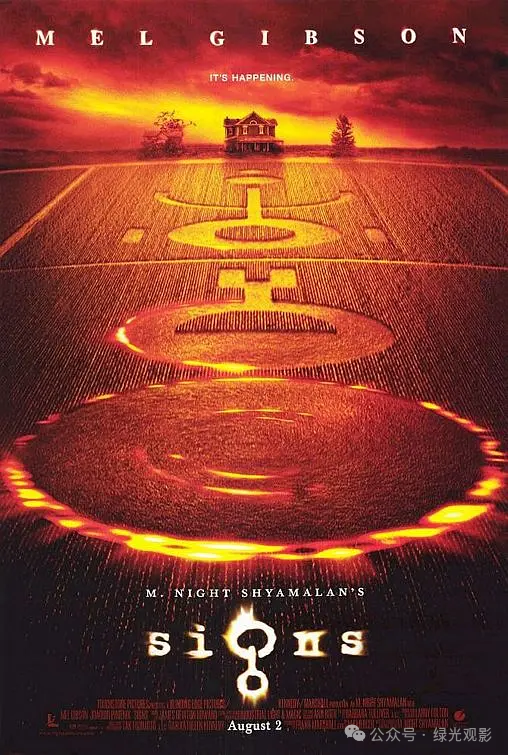
[ Our Home ]
Writing about Shyamalan is an unsettling undertaking. There is inherently an insurmountable chasm between written words and moving images. Elegant film criticism often relies on carefully crafted prose to stir sensory perception; this literary dance transports our consciousness back to the very moment we first encountered a piece of footage, letting us relive that initial viewing experience all over again.
In essence, film criticism can only serve as a backdrop to motion pictures. It cannot exist independently from visual works, nor can it be separated from them, while films very often have no essential need for critical commentary. Yet this is neither a cause for despair nor sorrow. Within the vast universe of cinema, personal writing and static text can unfold fragmented narratives that embark on explorations of films, much like expeditions that pioneer new civilizations.
Film criticism—our written words—extends far beyond merely commenting on visuals. These writings can be discovered by readers separated by vast stretches of time and distance. Through text, we converse freely about the cinematic worlds we inhabit, forge friendships, and build meaningful connections with one another.
Therefore, writing film criticism takes courage, as it means entrusting oneself to the boundless realm of cinema. Our words linger here in our stead, waiting for kindred spirits from faraway eras to connect, before setting off on adventurous journeys together.

This is especially true when writing about M. Night Shyamalan’s films. Shyamalan’s visuals assail the audience with the most immediate and intense emotions, yet they are not the unadulterated emotional impulses seen in Sirkian works. While each character in Sirk’s films follows an independently laid emotional path propelled forward at an unrelenting pace, Shyamalan weaves together trajectories of varying velocities. His characters are granted the option to step back or stand still, yet violent interrogations and ordeals inevitably intrude upon their slow, unfulfilling lives.
Thus, unlike the parallel, headlong momentum of characters in Sirk’s movies, Shyamalan’s films are rife with collisions and tensions. His characters are seldom afforded time for hesitation; once Shyamalan casts his judgmental hand over their heads, their only means of survival is to face what comes with unwavering resolve.
Undoubtedly, Shyamalan’s visual logic is tyrannical. He thrusts implausible scenarios upon both characters and viewers, abruptly forcing us to make definitive choices amid dilemmas with no prior explanation—and yet might this not also be a reflection of the fundamental nature of the world itself?
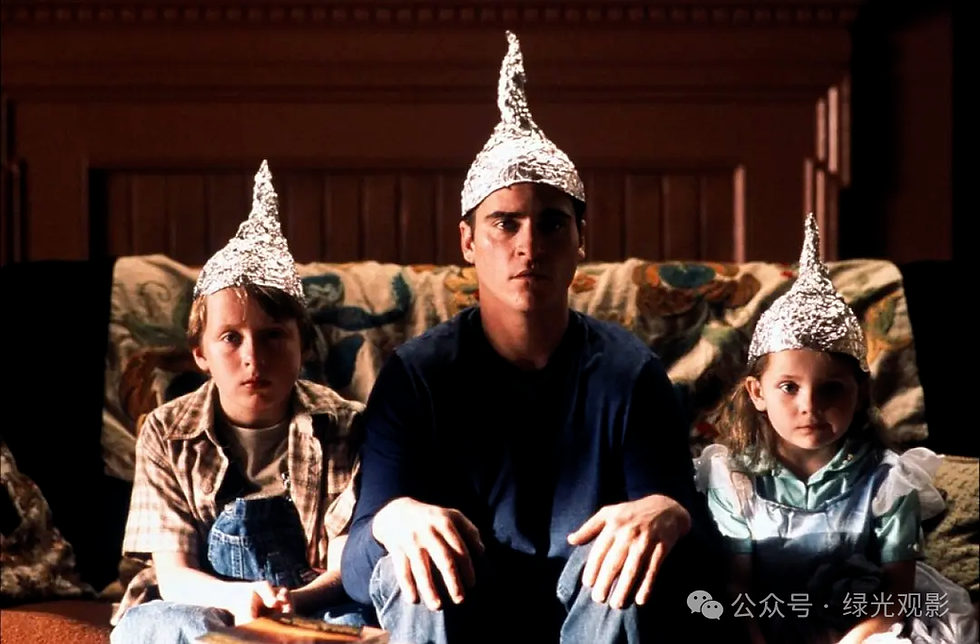
When our gaze is consumed by impossibility and the judgment mechanisms accumulated from the real world break down completely, confronted with the most illusory medium or performance as well as the unpredictability of the world itself, all we can do is trust ourselves and trust others. This forms a ritual of faith amid the raging tempest unfolding in the world. In the end, is it ourselves or others that turn appeals and pleas into good news? Or is it the cruelty and kindness of the world revealing one another’s true nature—the very truth of the world?
Accordingly, it is nearly impossible for written words to replicate the dynamism of M. Night Shyamalan’s cinematic imagery. Words lack immediacy. By contrast, the actors’ faces on screen, the postures of characters standing united side by side, and the shadow-laden house lined with supportive barriers in Sign exist as immediate emotional and physical presences. No linguistic intermediary is required between them, nor is one needed between us and them. Therefore, when written words are inserted between the scene and ourselves, we fall into doubt: we question the unquestionable link between such words and the emotional sensibility they intend to convey, and by extension, we question Shyamalan’s imagery itself.
In a sense, Shyamalan’s films are meant purely to be watched. For cinephiles who seek to take refuge within his works, you need only trust the gaze directed toward you—and this is undoubtedly an invitation to build a home together.
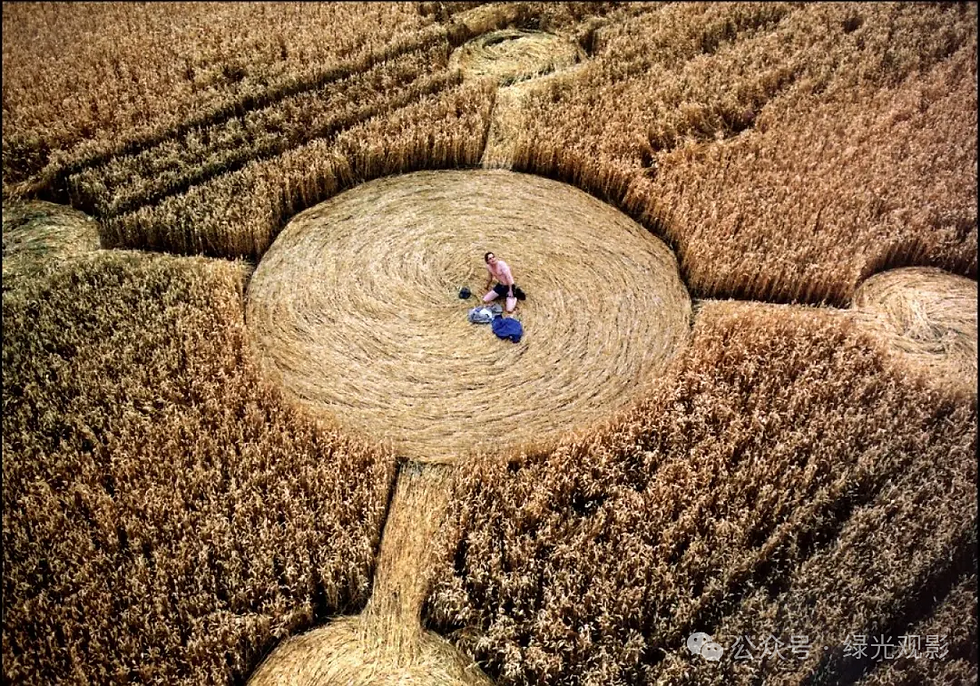
Eyes in the Darkness
Signs is a film about an alien invasion of Earth. Shyamalan concisely shrinks the entire planet down to a single household (a narrative approach that would take on an even more distinct form and thematic core in his later work Knock at the Cabin), so whether the aliens can take over this house symbolizes whether they can conquer the whole Earth.
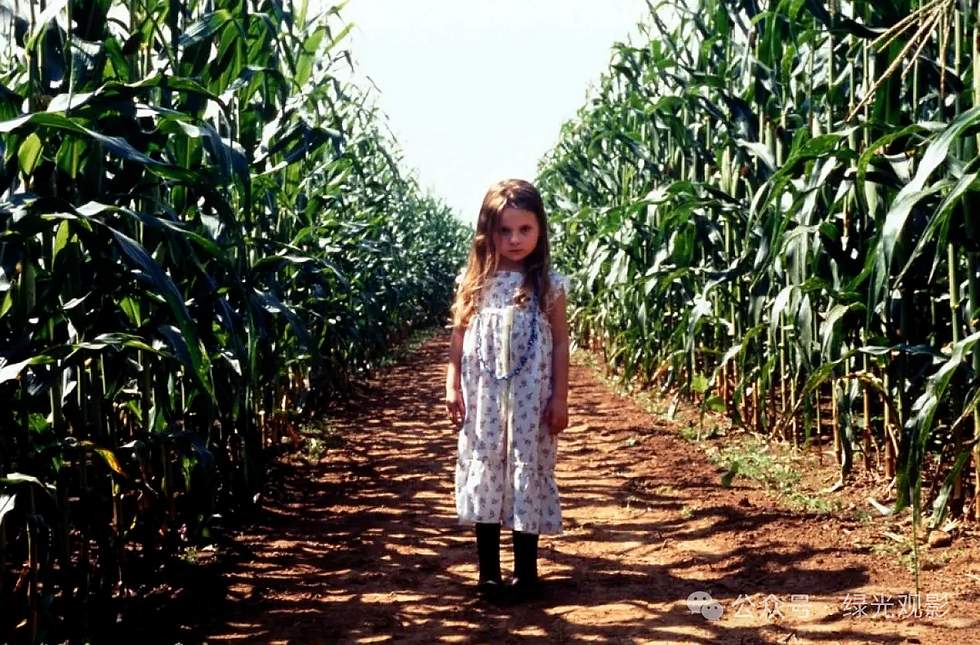
This household is far from stable. We learn the mother is no longer alive. The eldest son is unnaturally brave and mature, even killing the family’s rabid pet dog to protect his little sister. The young girl, innocent and vulnerable, has an almost puritanical obsession with water. Their uncle is a former baseball player who set multiple game records by swinging recklessly regardless of his team, yet lost his beloved career as a result. The father is an ex-priest who lost his faith after witnessing the horrific accident that claimed his wife’s life.
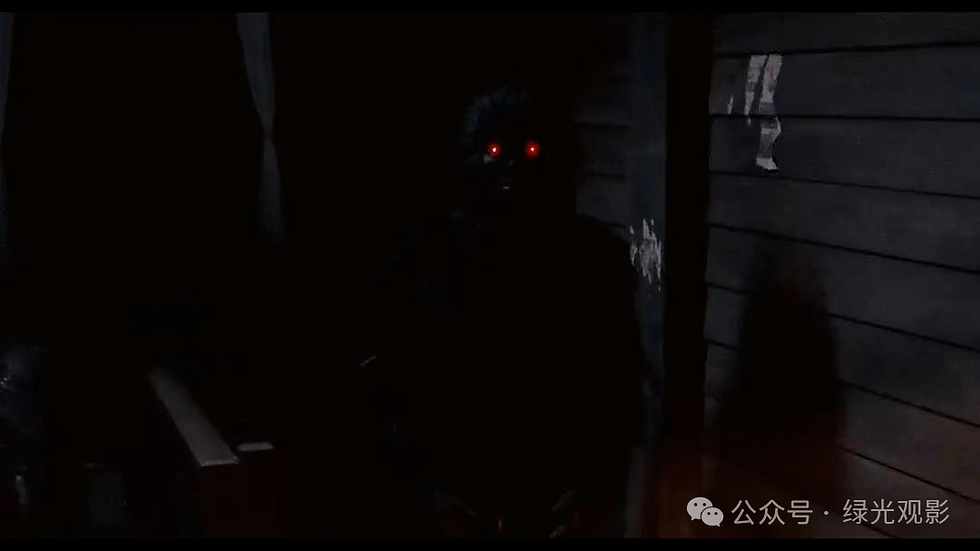
The individual griefs weighing on each family member weaken the house itself, which seems to watch the people inside. Time and again, faint, jarring noises unsettle them. They summon the courage to rationalize these unexplained sounds and unsettling stares as rowdy, aimless teenagers loitering nearby, yet neither the audience nor the characters can fully buy this explanation. Flickering lights appear on television screens, concealing themselves in dark woodlands and observing humans in pairs.
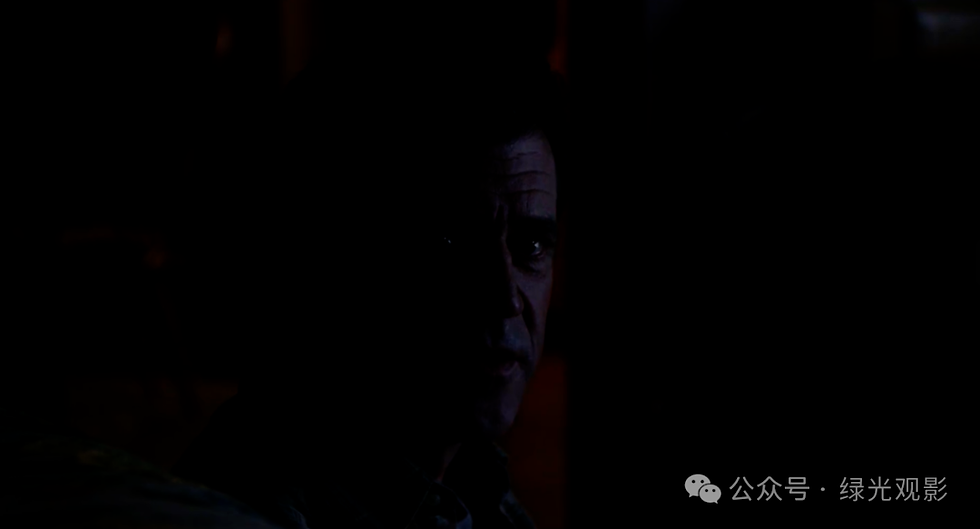
On the other side of the screen, two people at home sat on opposite ends of the sofa, making out each other’s facial features and outlines by the faint glow reflected off the television. Soon afterward, the father began telling a story, yet his tone sounded as if he were participating in some kind of religious ritual. The uncle listening intently stared straight at the elder brother before him, his eyes shimmering with a dizzying radiance in the darkness.
The father seated on the other side of the sofa was no different. We knew the light originated from the TV, yet in a daze, it felt as though we were suspended in a void between cosmic spaces, witnessing two mirrored explosions and collapses unfolding simultaneously beside us—one side swallowing everything inward, the other spewing matter outward. It became impossible to tell which was which; perhaps there existed only opposing directional tendencies with no stable fixed state. Words drifted and reverberated back and forth between them, their ultimate impact entirely unknowable.
We gradually notice that the human characters start taking on the same appearance as the extraterrestrials. Having traveled vast distances from the uncharted depths of the cosmos, these aliens bring not only peril but also the profound secrets of the universe, locked away deep within each of our own eyes...
We may also think of Apichatpong Weerasethakul's Uncle Boonmee Who Can Recall His Past Lives — deep within Thailand's rainforests, deceased relatives return in the forms of animals late at night to visit their earthly attachments. Instead of functioning as a dark mirror, the film gradually unveils its essence. Just as we assume all mystery has dissipated, woods, plow oxen and rivers draw it back into the natural world, observing humanity through an outsider’s perspective.
Apichatpong has no intention of staging a ritual meant to validate faith. For him, illusion and reality inherently coexist within the world, and cinema only needs to lay bare their inherent strangeness. By contrast, M. Night Shyamalan is far more preoccupied with the human realm. Animism strikes Shyamalan as overly abstract and intangible, which explains why he creates a thoroughly malevolent alien figure in Signs, stripping this alien presence of its fundamental sense of mystery.
Beneath the Neon Lights
The phrase "Protect Our Home" carries a double meaning: it refers both to the house shielding the family of four, and to the four family members standing together to defend their dwelling.
When extraterrestrials posed an imminent threat to their lives, they first held a vote and decided to make this house full of memories and emotions their site for survival and resistance. Right after that, they set about building a secure sealed room using existing door frames. As the interior space shrank and entry and exit points were tightly sealed off, there were still gaps through which aliens could sneak in.
Much like what Steven Spielberg depicted in Close Encounters of the Third Kind, alien spacecraft invade and overtake the characters’ familiar household furnishings with intense blinding light, transforming the house into an alien machine in an instant. The extraterrestrials extend luminous tendrils into the last hiding spots of the characters, or emit enticing glows to lure them out before capturing them.
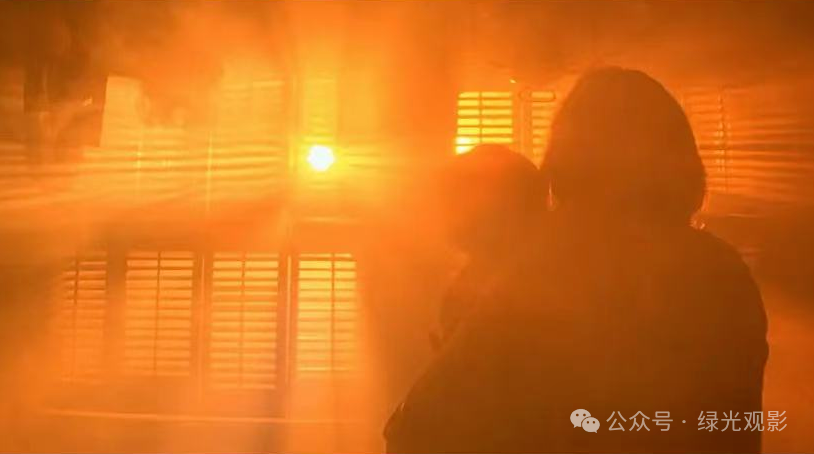
Spielberg embraces the dual nature of both furniture and aliens, whereas Shyamalan denies such duality to his extraterrestrials, reducing them to unadulterated evil. Meanwhile, the furniture that conceals their forms is forced to be severed from darkness, which is deeply disappointing. Yet when pieces of furniture are stacked to block the aliens’ path of invasion, or slowly reflect the scenes of their violent acts, we are profoundly moved by the tenderness inherent to physical objects.
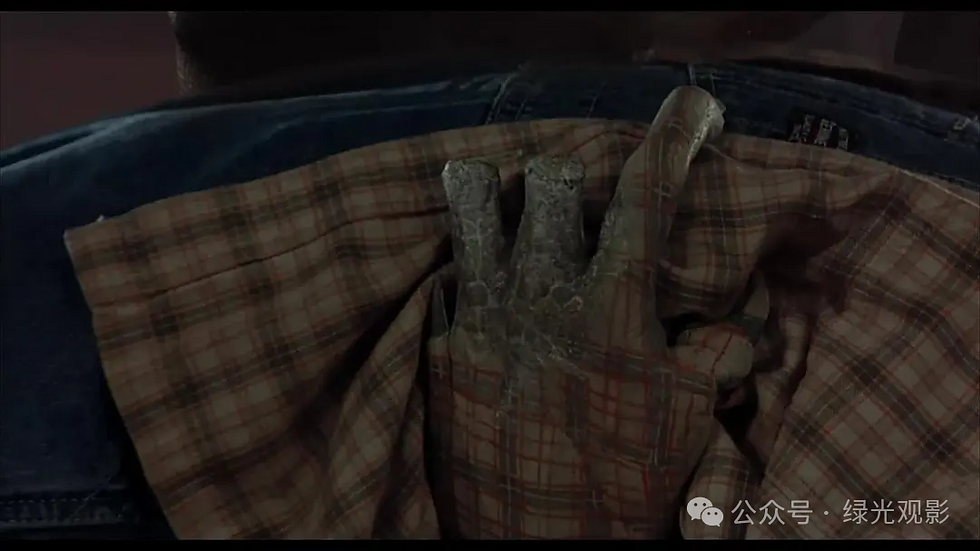
Of course, it is not merely the power of the objects themselves. The residents who placed these items in specific positions—the entire four-person family—all contributed to this battle. The girl’s peculiar quirk gives a reason for the presence of water; the uncle’s obsession with baseball, as well as the father’s encouragement toward the uncle, fuel the final showdown centered around a swing of the bat... In the end, the residents protected their home. Having witnessed the characters’ rebirth, the house in turn shuts out the bitter winter, continuing to offer warm shelter for their future lives.
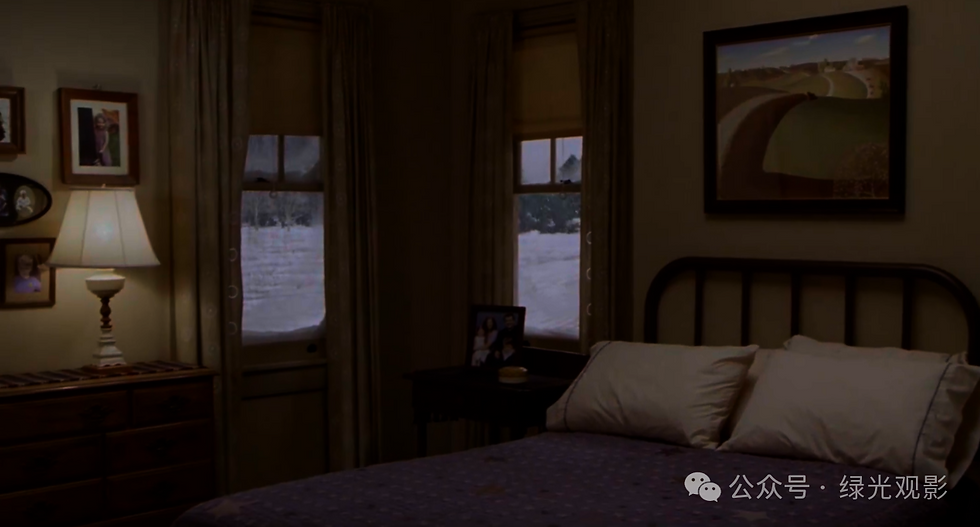
Image: From the Internet,
Author: Antoine,
Typesetting: Rose,
Managing Editor: Lu Xuanlong




Comments