
Portrait of a Lady on Fire | Echoes of Freedom and Fate

&Echoes of Freedom and Fate
Ancient Greek mythology abounds with discussions about fate, most of which are fundamentally tragic. Humans are invariably powerless against predetermined destiny, rendering them small and helpless in the face of it. Oedipus schemed meticulously at every turn, yet all his elaborate plans led him inexorably to his fated fate of killing his father and marrying his mother. Orpheus endured untold hardships, only to lose his beloved forever in an irresistible backward glance. Both tales revolve around one central theme: human resistance against fate is always futile, and people often stumble toward their destined endings amid their struggles.
Similar reflections on fate unfold in the film Portrait of a Lady on Fire. On an isolated island in 18th-century Brittany, Marianne, a female painter, is commissioned to create an engagement portrait for Héloïse, a young noblewoman set to wed a man in Milan. Resistant to having her portrait painted, Héloïse forces Marianne to observe and sketch her discreetly during their daily interactions. In the undisturbed seclusion of the island, the two women grow from strangers into confidantes, developing restrained yet profound affection through silent gazes and subtle shared moments.
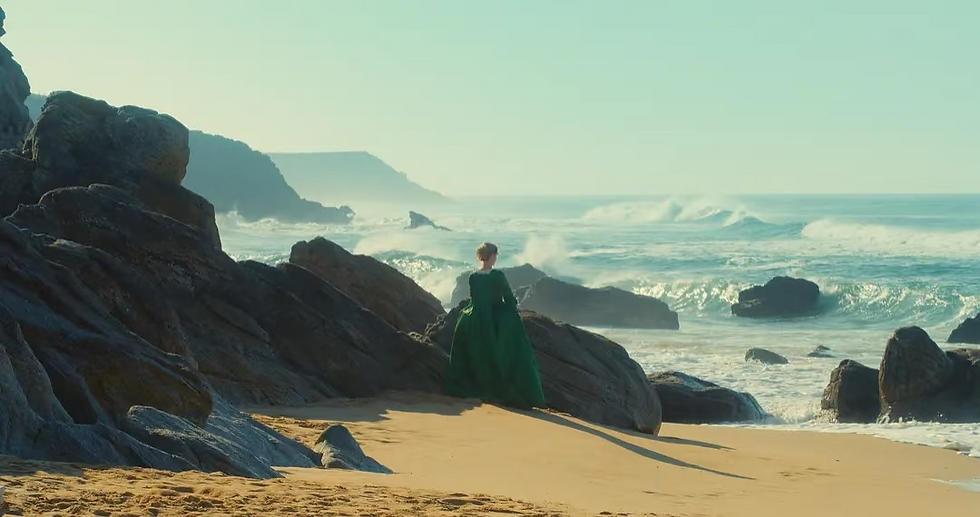
Heloise was trapped in an arranged marriage. Before her, her elder sister had ended her life by jumping off a cliff rather than submitting to this unknown betrothal. After such an extreme act of defiance ended in destruction, the heavy burden of this fate fell upon Heloise. She did not accept her fate willingly, nor did she stop struggling against it. Reserved and withdrawn, she refused to sit for a wedding portrait painted by an artist, hiding her longing for freedom and her resistance to her destined path.
Faced with an inescapable fate, she once asked Marianne: "Do you blame me for my future, for my marriage? Do you think I am cowardly? Would you have me refrain from fighting back?" She feared that her choice would ruin their encounter, yet also worried that forceful rebellion would shatter the little peace she had left. Marianne replied: "I want you to resist, but I will never demand it of you. I want you to be free." On the surface, they ultimately could not overcome fate. After leaving this isolated island akin to a utopia, everything returned to how it had been before.
Heloise complied with her family’s wishes, marrying and having children to lead a respectable life by societal standards. Marianne returned to her identity as a painter, continuing to create and holding art exhibitions. They did not elope, nor did they fight against convention to the bitter end, staging no grand, sensational rebellion against the world’s norms. Yet their love never faded with separation; instead, it endured eternally through the passage of time. Marianne’s painting remains forever on page 28 of the book, immortalized alongside Heloise in her portrait.

This is precisely the most captivating aspect of this film. Instead of denying the existence of fate, it offers an entirely new interpretation of it. The three female characters once held a discussion about the myth of Orpheus. The maid remarked, "Orpheus let love cloud his judgment and ruined everything." Marianne said, "To refrain from looking back is the choice of a lover; to look back is the choice of a poet." Héloïse stated, "He looked back because his wife called out to him. Orpheus turned around to answer his beloved."
The line "answering his beloved's call" struck me profoundly, for it breaks the narrative perspective of the traditional myth, shifting the initiative of storytelling away from the great hero to Eurydice, who was led down to the Underworld. At this moment, Eurydice is no longer a passive object waiting to be rescued, but a subject holding emotional dominance, and her call becomes the pivotal turning point of the tale.
This also serves as a metaphor for the relationship between Héloïse and Marianne. The dynamic between a painter and her model is never one-sided gazing. Standing before the easel, Héloïse asked Marianne, "Step into my position and see for yourself. If you are looking at me, then who am I looking at?"
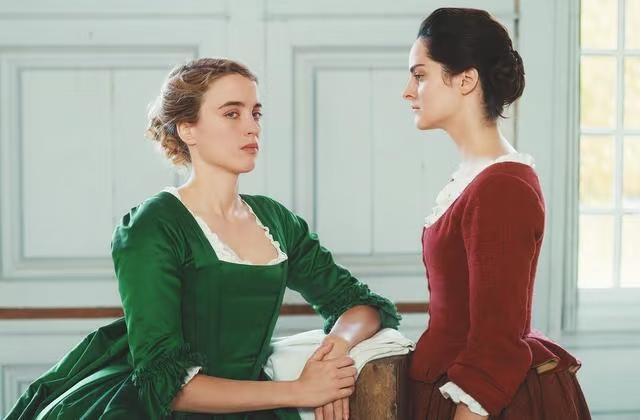
They keep gazing at each other as equals, with no hierarchy or distinction between host and guest, seeing each other’s souls on an equal footing. In *My Altay*, Li Juan writes that in Kazakh culture, friendship or love between people arises from being truly seen; hence, in Kazakh, the phrase "I like you" literally means "I see you clearly."
"The essence of love is being seen," and this is perhaps the most compelling facet of their bond. Take their first encounter, when Eloise asks Marianne for a cigarette. Eloise is certain Marianne has one, and Marianne is unsurprised by the request. By sharing a pipe, they tacitly share the same courage in the face of fate—not a dramatic, loud rebellion, but quiet endurance, nurturing hope for a harsh life amid resilience.
What makes the film most intriguing is that it breaks away from the traditional tragic trope of lovesick men and women, avoiding clichéd tales of unrequited love. Instead, it embodies a divine grace: the capacity to confront and silently endure overwhelming, irreversible twists of fate, a quality we often witness in older women around us. They bury their wounds deep inside, navigating life with gentleness and resolve, embodying a calm yet formidable divinity.

The film ends with no explicit reunion or straightforward confession. All we see is Héloïse trembling and weeping amid the live music. Did she spot Marianne? No one can tell. This deliberate narrative blank leaves ample room for interpretation and builds powerful dramatic tension.
Much like the urgent opening notes of Symphony No. 5, fate comes knocking at the door, leaving people with no choice but to stand firm and face its questioning head-on. Yet by stepping bravely and lucidly into this inescapable fate, the two transform their passive endurance in this moment into an eternal mutual fulfillment. "Do not regret, just remember." Restrained regret and lingering sorrow embody the exquisite subtlety and sharp perceptiveness unique to this film.
Defiance does not always have to take radical forms, freedom need not be gained through escape, and love is not meant for possession. Fate may be irresistible, but one’s inner choices, spiritual freedom, and sincere memories always remain one’s own. Though Marianne and Héloïse fail to alter the course of their destiny, they forge a profound spiritual connection within their limited time together, interpreting the most dignified love and unwavering freedom through mutual respect and selfless accommodation.
Image: From the Internet
Text: Wan An
Typesetting: Wan An
Editor-in-Charge: Lu Xuanlong



Comments