
Updated: Jul 30
Cannes Film Review of Titanic Ocean | Sparkling Mermaid Dreamland

% Mermaid Dream With Sparkling Ripples
Titanic Ocean (2026) is the feature debut of Greek director Konstantina Kotzamani. The film focuses on a Japanese boarding school that specializes in training professional mermaids. There, young girls undergo rigorous training, dreaming of becoming "real mermaids." A Greek, German, Romanian, French, Spanish, and Japanese co-production, the film had its world premiere in the Un Certain Regard of the Cannes Film Festival on May 20, 2026, and received a nomination for the Caméra d'Or.
Kotzamani's sensory acuity toward Japanese society is striking. She condenses the girls' hidden inner lives behind glowing screens, pursuing a spiritual intuition towards visuals rather than rational logic. Beneath what looks like an intimate coming-of-age narrative, an undercurrent of globalized dreams woven by internet cables surges forward. The film possesses a strange contemporary magic, with hybridity that fueled by turns, alien and familiar.
At the mermaid school attended by the film's protagonist, Akame, students are required to give up their real names and adopt mermaid aliases. Akame's alias is "Deep Sea" (played by Arisa Sasaki); her best friend is "Yokohama Blue" (played by Kotone Hanase); one of her fiercest rivals is "Eternal Sunset" (played by Haruna Matsui). Students must dye their hair. Everyone is repackaged as a fantastical mermaid, and it is in this persona they interact with the others.

Among the many films at Cannes this year, this one stands apart in style, even veering into the uncanny. In terms of plot, it is a familiar coming-of-age story. Girls swim wearing prosthetic mermaid tails, train their singing skills. They must choose a signature color and a stage name, while privately, their competition takes the form of who can hold their breath underwater the longest. These elements carry an implicit satire of Japan's, and indeed pan-East-Asia's idol industry.
The lead, played by rising 2000-born Japanese star Arisa Sasaki, goes by the alias "Deep Sea," and has long harbored a quiet crush for the coach, Kotaro. "Deep Sea" is reticent, yet intensely delicate and sensitive within. In the film's early stretch, she is voiceless.In singing class she could only manage a faint hiss, or notes that drift off-key. The reason for her voicelessness is left unexplained, but the audience can sense that her feelings for the instructor require an outlet through which to find voice. "Deep Sea"'s world revolves around Kotaro, the way she murmurs his name over and over to soothe her own longing.
Echoing songs of sirens that bewitch sailors, the loving murmurs form the long prelude to the mermaid luring the "shark."
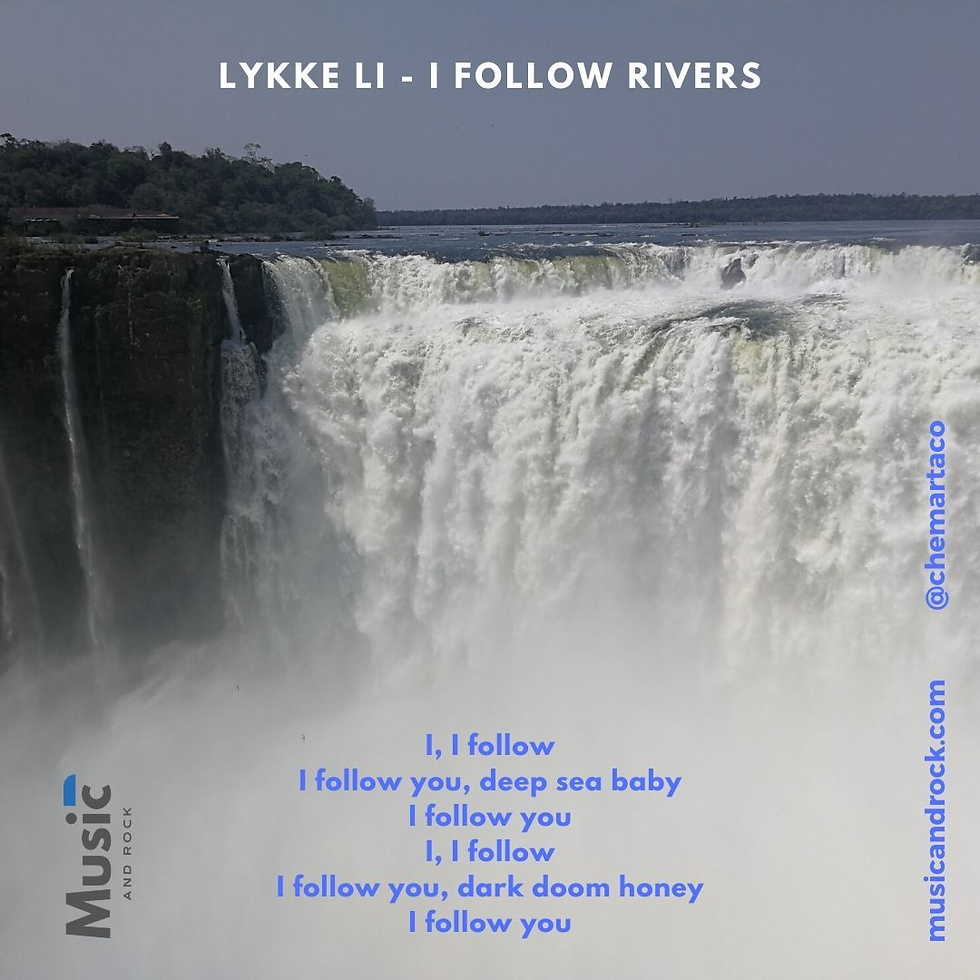
Lykke Li's song "I Follow Rivers" becomes the film's central thematic anchor. The first time "Deep Sea" sings this song in front of Kotaro, the mermaid's voice and Deep Sea's body fuse, as sound and form become one. As she chants wave after wave of purple sound, the lyrics themselves become the finest annotation and summation of the character "Deep Sea":
"Deep sea baby, I follow you.
Dark doom honey, I follow you.
You're my river running high, run deep, run wild..."
To succeed at the next monthly evaluation, she trains hard at holding her breath underwater and singing. The imagery of both siren and jiaoren (mermaid-person) seem to be appropriated and blended in the film. The Chinese mythology Bowuzhi (Records of Curious Things) written by Zhang Hua records: "In the waters of the South Seas dwell the jiaoren, who live in the water like fish and never cease their weaving; when they weep, their tears turn to pearls." The jiaoren's tears are also a curse, causing anyone who offends them to bleed from the seven orifices. "Deep Sea"'s singing carries within it a boundless, lingering love. Kotzamani openly stages a teacher-student romance that would ordinarily draw censure, yet she chooses not to directly resolve the narrative's irresolvability. Instead, through a deliberately slow narrative rhythm, she draws the audience into an emotional whirlpool, immersing us in the emotional vortex conjured by the mermaid's song that they briefly forget the absurdity of the unfolding events on screen.
"Deep Sea" clearly lacks the fierce self-drive that "Eternal Sunset" holds. She possesses pure kindness; even under intense competitive pressure, she seems to harbor no motive to belittle or scheme against others. Several close-up shots of Arisa Sasaki's face, her downcast eyes, and the extraordinarily drawn-out yet fleeting wanderings of a girl's reverie together form the film's crux.
Another highlight lies in the dense array and sheer range of pop-culture merchandise on display. From wigs and cosplay steeped in anime, to the real city lights beneath Tokyo's night sky, with fragments of idol culture scattered among the billboards. Together, these construct a tangible, lived-in urban texture. Titanic Ocean deliberately dwells on the bounderies between documentary and fiction, where reality serves both as mise-en-scène and as a fissure into the virtuality. The dominant palette of overlapping blue-violet and pink neon, diffused through soft-focus lenses, blooms into a collective melancholy and loneliness. Surging synthesizer waves buoy up a dreamlike, surreal experience. Synthetic, electrified vocals form an abyss between postmodern internet fog and the idol fantasy.

The mermaid competition depicted in the film operates similarly to idols' showcases: "mermaids" from around the world gather together, competing for victory through public voting. Kotzamani incorporates actual screen-recorded footage from livestreams and short videos, preserving real-time bullet-comments on screen. Other desktop-recorded footage include "Deep Sea" and "Yokohama Blue" forming a duo for joint promotion, and behind-the-scenes clips at the backstage. Various deskop recording are captured, lending the film a nonfictional, detached, and a satirical quality.
In one KTV scene, "Deep Sea" wanders by mistake into the private room of an elderly woman: the reflection in the glass window is no longer a refraction of vitality and vibrance, but a mirror in which she glimpses her own near-future aging self. The B-side of youth and pop culture is present. As Ayumi Ishida's "Blue Light Yokohama" plays on loop, the audience's thoughts are quietly carried into the ebbing tide of Japan's golden age. Just as "Yokohama Blue" ultimately returns to an ordinary life in the film: idols come and go, wave after wave, with some quietly exiting this globalized tide, their names fading from memory. While in the depths of the ocean, someone else stirs up a wave in an entirely new color.
This is a film meant for theatrical viewing. Perhaps it is hard to love it wholeheartedly, but the siren's song still traps most souls even after leaving the screening room.
Image: From the Internet
Author: Yuanye Shuimu
Typesetting: Lu Xuanlong
Editor-in-Charge: Lu Xuanlong




Comments