
Cannes Film Review of Dora: A Kiss Upon the Scars

& A Kiss on the Scars
In 1905, Sigmund Freud published Fragment of an Analysis of a Case of Hysteria. The narrative of this case study later became known as the "Dora case", an extremely famous and highly controversial text in the history of psychoanalysis.
Eighteen-year-old Ida, given the pseudonym "Dora" by Freud, sought treatment for persistent nervous coughing, periodic aphonia and migraines. Over three months of therapy, Freud attributed all her physical symptoms to the intricate triangular family dynamic she was trapped in: her father’s extramarital affair with their neighbour Frau K, Mr K’s sexual advances toward Dora, and Dora’s own transference toward her father and Frau K.
The author makes no comment on the medical validity of the conclusions drawn from this case, yet its sociological and literary value remains worthy of scholarly examination. Freud consistently viewed his patient from the vantage point of an omniscient male physician, pathologizing all of Dora’s anger, resistance and refusal as manifestations of so-called hysteria.
When Dora accused Mr K of sexually assaulting her, Freud dismissed her allegation as a projection of her unconscious desire for him. When Dora showed affection toward Frau K, he interpreted it as a displacement of her homosexual inclinations. Ultimately, Dora terminated the therapy after three months of treatment, going down in psychoanalytic history as a renowned resistant patient and a failed case.

For more than a century, countless feminist scholars have strived relentlessly to rewrite this narrative, attempting to retrieve the submerged real young woman Ida from the confinement of male discourse.
In Speculum of the Other Woman, Luce Irigaray regards Dora as a pioneer resisting the masculine symbolic order; in *Gender Trouble*, Judith Butler analyzes how Dora’s desires challenged the stability of the heterosexual order. The film *Dora* we are discussing today also represents an extremely recent and bold endeavor within this tradition of rewriting.
South Korean director July Jung places Dora, a teenage girl covered in rashes, on a relatively isolated island, letting her relive and attempt to reshape her own fate. She seeks to dissect the predicaments of contemporary East Asian women using Western psychoanalytic theories from a century earlier.
Within the film, Jung transposes Freud’s case study onto the East Asian psyche, creating subtle chemical effects, yet the work suffers from narrative unfocusedness stemming from overly ambitious intentions. Set against the backdrop of a utopian vacuum, the unique visual appeal of the director’s filmmaking is amplified, yet this also exposes certain limitations in her directorial command.
A body that no longer stays silent
The most distinctive adaptation of Dora lies in how the director translates all unspeakable psychological traumas into visible and tangible physical language. Shortly after the film opens, a close-up shot of Dora (played by Kim Do-yeon)’s skin is presented to the audience, with dark red rashes spreading across her shoulders, back, waist, limbs, lying silently upon her body.
For Sigmund Freud, Dora’s physical symptoms demanded interpretation as disguises for unconscious desires. In this film, however, the body itself embodies the truth.
Drawing on arguments put forward by Susan Sontag in *Illness as Metaphor*, we can clearly perceive—or deduce—the director’s intention: she refuses to reduce women’s suffering to the heavily gender-biased label of "hysteria", and instead frames it as an expression of Body Politics.

Trauma is no longer a deeply buried secret waiting to be unearthed within the mind, but wounds manifesting visibly on the skin. Those rashes that emerge and fade before the naked eye embody the repressed frustration or anger lurking inside Dora; constrained beneath the skin by social norms and familial ethics, these emotions threaten to rupture outward at any moment and trigger a devastating outburst.
East Asian societies have long emphasized forbearance and self-restraint, discouraging overt emotional expression. For women in particular, voicing anger, desire or suffering is often deemed unladylike. Within such a cultural context, when every word meant to articulate pain is stigmatized, and every grievance is dismissed as oversensitivity or hysteria, the body frequently becomes the sole outlet for psychological torment. This is evidenced by South Korea’s persistently high rates of depression and suicide among women in recent years, as well as the high prevalence of somatization among East Asian women. Accordingly, the film does not have Dora verbalize her grievances about what she has endured; instead, it lets her body speak for her.
The movie refrains from using voiceover or monologue to explicate Dora’s inner psyche, letting cinematography take the place of words and centering her body as the primary narrative vehicle. Abandoning conventional wide-shot storytelling for much of its runtime, the film employs extensive close-ups focused on fragmented parts of her body: skin texture, trembling fingers, even the slight quiver of her pupils. This framing technique that uses fragments to represent the whole not only rejects the male gaze that objectifies the female body but also establishes a subjective perspective entirely belonging to Dora herself.
We cease observing a supposedly "troubled" teenage girl from an external standpoint. Instead, we perceive the world through her eyes, and via her skin sense the briny tang of sea wind, the chill of rainwater, and the warmth of another person’s fingertips. After the two get caught in the rain, Dora carefully dries the rain off Nami’s hands, with the camera lingering long over their interlaced fingers and skin. This intricate mix of longing and hesitation is conveyed powerfully without a single line of dialogue.
She kissed her emptiness
Depicting the intricate bond between older women and young girls has long been an enduring thematic focus in July Jung’s works. From Do-hee, an abused teenage girl, and Young-nam, the police officer who protects her in A Girl at My Door, to So-hee, a young girl driven to suicide, and Yoo-jin, her senior who fights for justice on her behalf in Next Sohee, the director consistently explores the unique dynamic between women—one defined by protector and protected, while also serving as mutual reflections of each other to some degree.
In Dora, however, this dynamic is pushed to an even crueler and more complex extreme. While the female relationship in A Girl at My Door culminates in mutual redemption, Dora lays bare the dark underbelly of such a connection. Though both Young-nam and Do-hee carry trauma in A Girl at My Door, they ultimately draw strength from one another and escape the violent town together. In Dora, by contrast, the two wounded souls fail to heal each other; instead, they tear at and entangle one another, dragging each other into an ever-deeper abyss.


Nami, played by Sakura Ando, worked as an actress in Japan before marrying a man from South Korea and moving far away. Now she makes a living farming on this island to support her entire family. When her children run and play on the vegetable plot with Dora, she scolds them sharply. She may long to pat her kids gently on the head like her husband and cheerfully tell them to go play, yet she bears the full weight of household responsibilities. Every trampled tomato seedling means lost future income, and she is the only one in the family who worries about such matters.
This scene mirrors countless East Asian families in modern times. It echoes a viral quote from a recent interview with Liu Xiaoqing: “From the day you (a woman in a marriage) get pregnant, your husband is set free. He has fulfilled his duty to his parents, and then he goes back to living like a carefree young man.” Though Nami speaks fluent Korean, she often chooses to stay silent in daily life. She is used to floating adrift on the sea’s surface, and instead of sheltering from heavy rain, she opens herself up to the downpour—these small acts constitute her only quiet rebellion against life.
A girl deprived of maternal care and a woman who underwent a mastectomy forge a connection through their bodies amid a breakdown of verbal communication. One night, Dora kisses the surgical scar on Nami’s chest. The shot is remarkably restrained yet profoundly powerful. Numerous close-ups focus on where their skin meets, capturing the contact and slow movement of lips against the scar. The physical imperfection long deemed a blemish to female allure receives an equal, tender touch for the very first time. Nami’s body trembles with embarrassment and bashfulness; she offers no intense reaction, yet her subtle response conveys her most genuine emotions.

This relationship is neither romantic same-sex love nor a simple bond between a mother and daughter. They serve as mirrors for one another, seeing their own past and future reflected in each other. They comfort yet exploit one another, rely on yet suspect each other.
Unlike many other feminist filmmakers, Jung Julie does not portray relationships between women as flawless, conflict-free solidarity. Instead, she lays bare the power imbalances, misunderstandings and hurts inherent in female bonds. Nami is both Dora’s protector and her tormentor; she offers Dora a warmth she has never known, yet also drags her into deeper despair. Dora’s feelings for Nami, in turn, are a tangled mix of love, hatred, dependence and defiance. This depiction of complex, authentic female relationships is precisely what sets Jung Julie apart from other female directors.
The one who created her also trapped her
Nevertheless, whether judging from online public opinion analysis or my own impressions, Dora still has certain flaws. The director was overly eager to do this work justice, desperate to redeem Dora’s reputation and rewrite this classic case from a feminist perspective. Ironically, she unwittingly turned herself into yet another analyst. By mapping numerous dramatic plot points onto details from the original case, she reduced Dora once again to an object of interpretation rather than the figure known as "Ida".
From the sick father, his extramarital affair with the neighbour’s wife, to the neighbour’s husband’s sexual assault against the teenage girl and complicated transference of emotions, nearly all core elements of the original case are transplanted intact into the film. Jung Joo-ri began with a well-intentioned premise: to let Dora speak for herself instead of being psychoanalysed by a male doctor.
Yet in the actual creative process, she fell into the same trap as Sigmund Freud. She attempted to frame all of Dora’s actions within her own theoretical framework, rather than allowing Dora to act freely as an independent individual. The intense conflicts crafted to align with the case boost the film’s watchability, yet they also prevent audiences from forming deeper emotional empathy with the character.
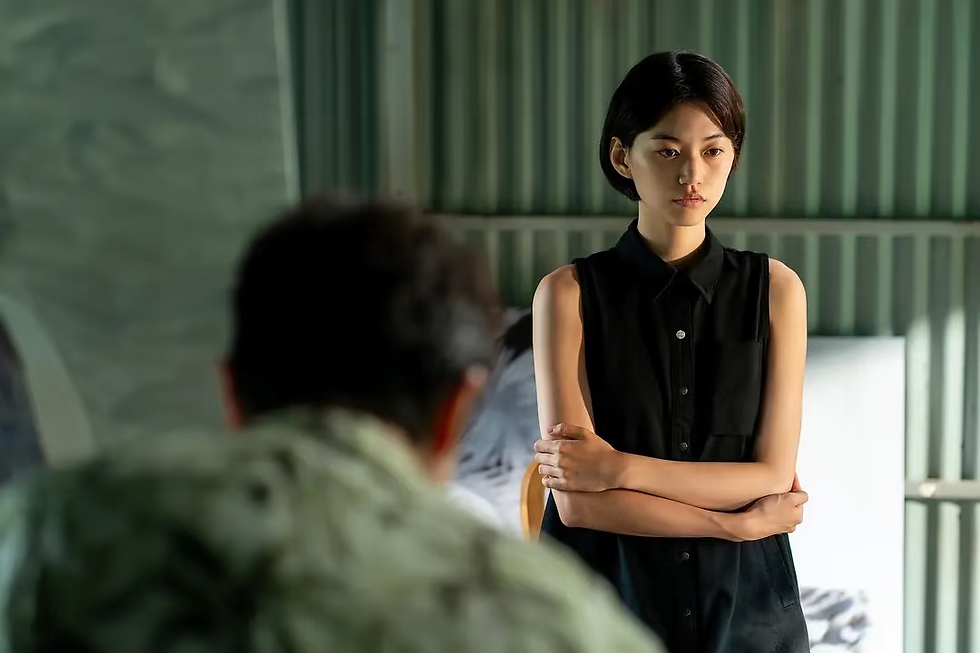
Furthermore, the director attempts to address multiple themes in a single film, including sexual violence, familial trauma, sexual orientation, consent issues, mental illness and more, yet none of these subjects receive in-depth exploration.
The film’s handling of consent in particular is fraught with unsettling ambiguity. During several intimate encounters between Dora and Nami, it becomes difficult to distinguish which interactions are mutually consensual and which constitute coercion by one party against the other. While this ambiguity partly mirrors the complexity of power dynamics in real life, it also leaves viewers confused and uncomfortable throughout their viewing experience.
The Black character in the film also serves an oddly contrived purpose. He could have functioned as an intriguing outsider perspective, bringing external reflection to this insular island narrative. Instead, the director only features him sporadically throughout the movie, reducing him entirely to a token plot device. Far from adding thematic depth to the film, this character muddles its already convoluted storytelling further.
The isolated island setting does amplify the poetic quality and visceral impact of the cinematography; certain wide establishing shots, in particular, deliver peak psychological tension. At the same time, however, this setting severs the characters’ connections to the real world, confining all conflicts to an internal cycle within a closed environment and stripping the story of broader social critique. This explains why many viewers perceive the film as emotionally intense yet substantively hollow.
Absurdity is an attitude
The most controversial and thought-provoking part of the film is its ending. When all conflicts escalate to their peak and every conventional solution proves to be a dead end, viewers cannot help but wonder what fate the director has arranged for Dora.
Dora sails a boat and abducts Nami to a secluded cave, where she lights a campfire and stacks stones. This ending strikes many viewers as abrupt, bizarre and incomprehensible, yet it remains deeply memorable.
Notably, the symbol of "stones" also plays a prominent role in Freud's original case study. In Dora's second pivotal dream, she wanders through an unfamiliar city, sees numerous stones, and then climbs a small hill.
Freud interpreted this dream as an expression of Dora's sexual desires and her attachment to her father. However, in Dora, after examining it from numerous perspectives, the author still struggles to reach a definitive conclusion regarding what the stacked stones truly symbolize. Some people even joke that they symbolize the two characters regressing to the Stone Age. This may well be one of the messages the director intended to convey.

Stones are merely stones—silent, hard, and resistant to interpretation. The same applies to Dora: she refuses to be defined or analyzed by anyone; she simply exists.
This ending comes across as absurd yet meaningful. Unlike many feminist films that craft an ending of revenge or social integration for their protagonists, it does neither. In this patriarchal world, there is no genuine way out for Dora. Family is a cage, romance a trap, and therapy another form of oppression.
When every door is slammed shut, this irrational, resolute flight becomes the only viable form of resistance. Just like Dora herself, it requires no explanation or justification. It is an attitude in its own right, a rejection of all oppressive narratives.
At the same time, however, this finale lays bare the powerlessness of the director, and by extension, of reality itself. Unable to carve out a true path forward for Dora, the director can only send her fleeing toward nothingness. Though charged with defiance, this escape is steeped in profound despair: women’s acts of resistance are often confined to such passive, escapist modes.
Conclusion
In an era where female voices are growing increasingly prominent, many feminist films fall into the trap of dogmatism, rushing to offer definitive answers and make moral judgments.
Yet director Jung Joo-ri avoids this pitfall in *Dora*.
Women possess intricate, turbulent inner worlds, and female awakening, resistance, and the fight for women’s rights have never been straightforward journeys. She seamlessly weaves Western psychoanalytic cases from a century ago into the psychological struggles of contemporary East Asian women.
Throughout this narrative, she dares to depict women’s vulnerability, confusion and internal conflicts, and acknowledge powerlessness and limitations. Such an artistic endeavor is profoundly valuable in its own right.

A century ago, Dora refused Freud’s framed analyses and interpretations by terminating her therapy. Through her own actions, she told the world that only she had the right to define her body and her suffering.
A century later, the film Dora finally gives Dora a voice of her own. Though this voice is not yet clear or powerful enough, it is profoundly significant nonetheless.
The journey for women to reclaim narrative authority has never been a smooth, easy path. It is fraught with thorns, setbacks, contradictions and confusion, yet hope remains as long as we keep moving forward.
Image: From the Internet
Author: Wan An
Typesetting: Lu Xuanlong
Editor-in-Charge: Lu Xuanlong




Comments