
Updated: Jul 21
Improvisation - Meticulousness - About Nobuhiro Suwa
*Exclusive Interview with a Film Star
As a figure within the broadly defined "Rikkyo New Wave"—a movement originating at Rikkyo University in Japan in the early 1970s, which gained formal recognition and critical attention in Japan’s film industry throughout the 1980s and 1990s—Nobuhiro Suwa has long stood out as a distinctive auteur who has rarely received in-depth critical scrutiny. Unlike Kiyoshi Kurosawa, Shinji Aoyama and Kunitoshi Manda, the standard-bearers of this wave who all studied directly under Shigehiko Hasumi, a film theorist and critic specializing in phenomenology, their films feature distinctly stylized blocking of performers’ physical movements that are scarcely present in Suwa’s work. In Kiyoshi Kurosawa’s films, actors embody spectral physicality, advancing menacingly through mechanical, rigid walking motions to stage an unsettling incursion. Shinji Aoyama’s casts wear blank, impassive faces as they flee across barren wastelands toward an unknowable far shore. Meanwhile, performers in Kunitoshi Manda’s pictures carry unwavering resolve, slowly conveying love and conviction to both their on-screen partners and the audience. Such formally codified directorial techniques, worthy of sustained stylistic analysis, are all but absent from Nobuhiro Suwa’s filmography.

Suwa’s cinematic education largely stemmed from a cohort of independent filmmakers who emerged starting in the 1980s. He took an integral role in the independent film collective led by Masashi Yamamoto and Gakuryû Ishii back then, and later spent years working on documentary productions for television stations. For this reason, it was not until 1997 that he delivered his second narrative feature film to Japanese cinema, Two (released under the English title 2), with his debut work being the 1984 release Hanasareru Gang. However, if we account for the differences between Atsuhiro Suwa and other standard-bearers of the Rikkyo New Wave in such a simplistic manner, we will easily fall into conceptual dead ends. When the thinker Shigehiko Hasumi is reduced to mere words and concepts, his many disciples working in film can naturally be grouped as a collective bound by shared artistic pursuits and stylistic traits—yet this completion of conceptual categorization often reverses cause and effect. Hasumi’s own body of thought is intricate, rife with gaps and unarticulated spaces. Can we truly judge Hasumi solely based on his single book Yasujiro Ozu, Director? When Hasumi critiques fellow international scholars who wrote about Ozu—such as Gilles Deleuze’s discussion of Ozu in Cinema 2: The Time-Image or Paul Schrader’s analyses—does the "viewing tinged with dread" he seeks to articulate constitute a total rejection of the counterexamples he cites? Clearly not. The fundamentalist declaration that "to watch films and write about films ultimately leads only back to cinema itself" actually carries layers of meandering, circuitous reasoning. When Deleuze perceived infinity and Zen philosophy in the vase featured at the end of Ozu’s Late Spring, or when Western theorists interpreted Ozu through an Orientalist lens, their scholarly project centered on constructing a cyclical loop of theory and moving images. This practice frequently pulls intellectual creation and verification away from the cinematic image itself. Hasumi felt profound dissatisfaction and indignation toward this outcome. He resolved to use an almost verbose mode of language to draw gazes directed toward cinema back from the thick foggy woods of abstract concepts, focusing purely on what lies plainly before the viewer through descriptive prose, and urging all observers to seek the essence of film only on the surface of moving images.

I was utterly captivated by Hasumi’s discourse on Ozu, drawn into a maelstrom of fascination and conviction. Yet the closer I draw to this perilous figure and his body of thought, the more I perceive an affinity between such peril and the solid truths I once accepted without question. When Hasumi divides the spatial dimensions of Ozu’s films into discrete, suspended realms, I cannot help but recall Gilles Deleuze’s concept of "any-space-whatever". Perhaps readers are entitled to such wishful thinking, yet this exchange can still be deemed a form of collaboration: writers pour their emotions and ideas into words, which in turn mediate the indirect conveyance of those same feelings and thoughts. Words themselves are always fraught with contention and contradiction, and communication between distinct individuals is fraught with difficulty. If heartfelt trust and mutual understanding are not felt prior to engaging with written text, only shoddy imitations will inevitably emerge. Those who hold sway over discourse will churn out replicas of themselves en masse, such that repetition ceases to generate difference and merely cycles through rigid, uncompromising concepts and rhetoric.
Therefore, once concepts—indispensable vehicles of communication—have furnished us with the guidance and introduction needed to venture into an uncharted domain, they must be immediately interrogated, even discarded. We ought no longer to view the figures of the Rikkyo New Wave solely through Hasumi’s lens, but instead look at Kiyoshi Kurosawa and Shinji Aoyama with independent critical vision. Likewise, the countercultural aesthetic of independent production collectives forged by Masashi Yamamoto and his contemporaries should not stand as a barrier to our discussions on Nobuhiro Suwa.
& Improvise
The term "improvisation" appears frequently in media interviews with director Nobuhiro Suwa and in publicly available materials discussing his works. Perhaps we should first examine what improvisation means. Generally speaking, improvisation refers to spontaneous extensions that actors make to their characters’ mental states and given situations without prior preparation. It typically manifests as actors intuitively grasping and performing the subsequent direction of the plot, or delivering unique facial expressions and physical movements under a certain emotional state. Within this brief definition, the most widely recognized prerequisite is undoubtedly "no prior preparation" — and indeed, such scenes can be seen repeatedly throughout Suwa’s filmography.
In Two, the female character portrayed by Eri Yu often inserts laughter as a punctuation mark between lines and emotional beats when confronted with her boyfriend’s insults, displays of vulnerability, or self-deceptive acts. Just as the script seems to lead the audience into an impasse in their relationship, this laughter unexpectedly carves out a crack for escape; yet its steady rhythm yanks viewers back into despair in an instant. It is utterly inconceivable that such moments were written into the screenplay — they could only emerge from the characters’ real-time navigation of their circumstances within the actual flow of performance. Another example comes from M/OTHER, where the husband and wife played by Tomokazu Miura and Makiko Watanabe erupt into a bitter argument amid a suffocating household atmosphere. The camera captures the dispute at an uncomfortably close distance and rapid pace with almost no cuts whatsoever. This sequence inevitably evokes John Cassavetes, the pioneering filmmaker who spent his career embracing and continuously expanding the boundaries of improvisation. On the surface, improvisation is indeed deeply intertwined with the absence of prior preparation.

& Meticulous
The opening of Private Family Novel captures the atmosphere of a household with an ambiguous sense of horror: the camera is fixed at a position level with the dividing line between the living room and the bedroom. We see the living room bathed in daylight, and through the slightly ajar door, the darkness of the bedroom is visible, with whispers emanating from within that harbour secrets yet to be uncovered. The plot then moves forward, yet the camera only pans with a slight range. This is a scene vastly different from the so-called "unrehearsed" shots. If improvisation places wonder upon the unpredictable, then deliberate planning achieves the capture of theatricality through the most precise man-made framing. Thus, we are presented not only with the seemingly contradictory pairing of improvisation and meticulous design, but also the twin concepts of theatricality and wonder.

Let us turn next to A Perfect Couple. Midway through the film, Valeria (portrayed by French actress Valeria Bruni Tedeschi), playing the wife, stands rigid as a statue and confronts her husband about his overly affectionate interactions with other women at the party. During this argument scene, Valeria’s figure is half-shrouded in faint spillover dim light as she speaks with a devilishly icy tone, holding nearly the exact same posture the entire time. Meanwhile, her husband grows increasingly agitated, striving to draw his wife out of the shadows. Director Suwa likewise keeps the camera locked in a fixed position, with no artificial adjustments made to the living room lighting whatsoever; the unchanging setting itself bears witness to the couple’s entire performance. Within this static framework, only Valeria’s bodily outline remains visible, yet the force of her accusations slowly builds, surges forth and then recedes again beneath this somber, ritualistic darkness.

If the director, as a meticulous coordinator, is the one who arranges lighting, then the actors' performances—or to put it another way, improvisation—are the most vital element that endows light with temporality. For Nobuhiro Suwa, cinema is a hybrid of theatre and magic. Theatre, an artificial construct, furnishes a stage that integrates all manner of elements for magic to unfold. Yet the stage’s own rigid precision relies on intricate, ambiguous textures to shatter its solid framework; thus magic can never come into being without the most meticulous deliberation and planning. In *H Story*, the opening sequence features Director Suwa himself on camera, guiding Béatrice Dalle, the actress, to convey specific emotions and states through precise physical movements and other directional cues. This marks Suwa’s most unflinchingly raw revelation and self-reflexive gesture: beneath the veneer of so-called improvisation lie exacting, almost draconian performance demands placed upon the actors, who can only push back against the script’s violation and confinement of their bodies through uncontrollable physical expressiveness.

& Exorcise evil spirits
In H story, we can clearly perceive that improvisation, as a method or a hex, dooms its performers. Just as wartime footage and human memories intertwine in Alain Resnais’ Hiroshima, My Love, Suwa layers overlapping shadowed texts onto his actors’ bodies in an even more sinister fashion. The passage of time and the overflow of media have turned modern society into a series of dubious spectacles. Suwa’s anxiety stems not merely from wordless perplexity over wartime memories, but more profoundly from an essential doubt about performance as a medium—or cinema itself—and its capacity to depict what we call genuine reality. For this reason, he lays himself bare as never before, using his own identity as bait to draw forth a modern wasteland. What exactly is the expanse of ruins through which Béatrice wanders and where she ultimately vanishes? What weight of history rests upon the newly regrown edifices of human civilization in the far background of that landscape? Suwa has no answers, as he stated in an interview about the film: “Hiroshima is merely where I grew up; this place holds no special meaning for me.”

A fearless yet futile search. Through emptiness, it fulfills the ultimate faith held by the hopeless characters and couples in his films, while laying bare Suwa’s cruelty to the audience in stark, jarring fashion. Much like M. Night Shyamalan, he frequently casts himself in his works as either a perpetrator of violence or a cold onlooker to it.
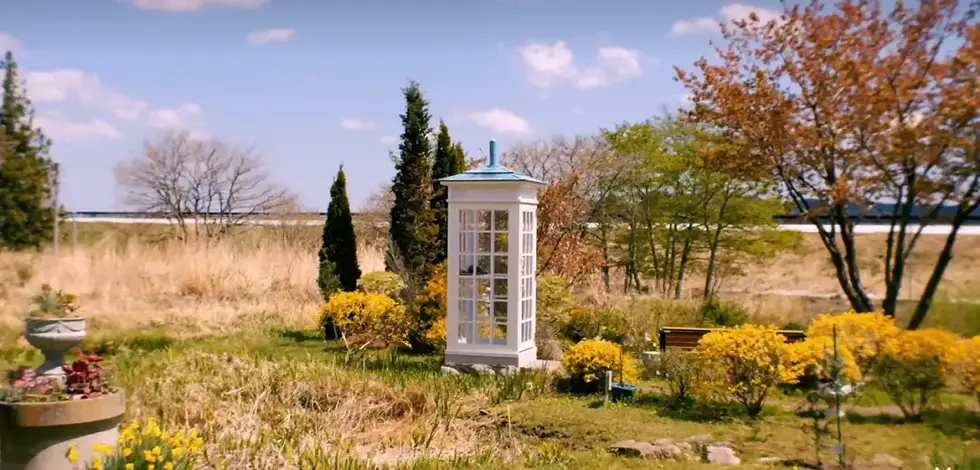
The Lion Sleeps Tonight, by contrast, explores the joy of playing with shadows. Jean-Pierre Léaud, the embodiment of the French New Wave and the perpetual runaway child of cinema throughout film history, now lays bare his own aging and frailty unflinchingly on screen. The heaviness of his performances seems softened and worn away by the passage of time. When Léaud stands before a mirror, he daubs makeup on his face in a faintly comical manner; the hollows and ripples etched across his features are reflected clearly in the glass, revealing a face marked by old age. We see that the character no longer needs to hide who he is, cloak himself in shadows, or recoil in terror from his own reflection. This stands in stark contrast to the many depictions of unendurable shadows across Suwa’s filmography: the frantic agony of Aiari Yanagi studying her reflection before running away from home in Two, Makiko Watanabe’s sudden emotional breakdown confronting her illusory mirror image in A Family Diary, and the opening sequence of A Story of Modern Divorce, where reflections on car windows obscure the protagonist—all of these scenes underscore the unbearable nature of shadows. Though The Lion Sleeps Tonight brims with the sorrow of aging and laments the erosion of memories that erase one’s trace of existence in the world, childlike curiosity holds equal anticipation for all mysteries. Children rarely shrink back in fear; instead, they are drawn forward to explore. As a result, Suwa’s film radiates an unprecedented vibrancy and brightness. The children craft screenplays and wield cameras to banish the ghosts of the past clinging to Léaud. Grief lingers still, yet their actions attest that performance, as a tangible act, transcends empty contemplation and fully enters the realm of practice. It is perhaps the testament of The Lion Sleeps Tonight that led Suwa to craft such profound faith in wandering in Voices in the Wind. He places trust in constant roaming across places and people, believing sincere human connection can lift one out of the grief wrought by disaster. The telephone booth waiting for grieving souls in the park undoubtedly redeems its occupants from shadow, rather than standing merely as an inanimate relic lost amid rubble, mute and unspoken.
In the closing scene of The Lion Dies Tonight, Lloyd stares wide-eyed as he acts out his final moments. This is undeniably a clumsy, shoddy performance—ugly in the same way an elderly person rigidly forces themselves onto others to seek validation once their memories and thoughts have grown stagnant with age. Yet it is equally moving. We are touched not only by Lloyd’s wholehearted devotion to acting, but also by Director Nobuhiro Suwa’s relentless dive into the darkness of performance. Even though this darkness can no longer be filled by the desperate rift between humans and the world seen at the turn of the century in M/Other, A Story of Yonosuke or A Modern Divorce Story, Suwa still yearns for a confirming gaze from his audience: a faith that performance can never reach anything definitive or safe. We may disagree with his perspective, yet we are stirred by this raw honesty, which compels us to throw ourselves wholeheartedly into the act of performing…

Image: From the Internet
Author: L. Lu
Typesetting: Liu Ruiyan
Managing Editor: Lu Xuanlong



Comments