
Film Review: Sabar Bonda — What May Bloom Within Ten Days
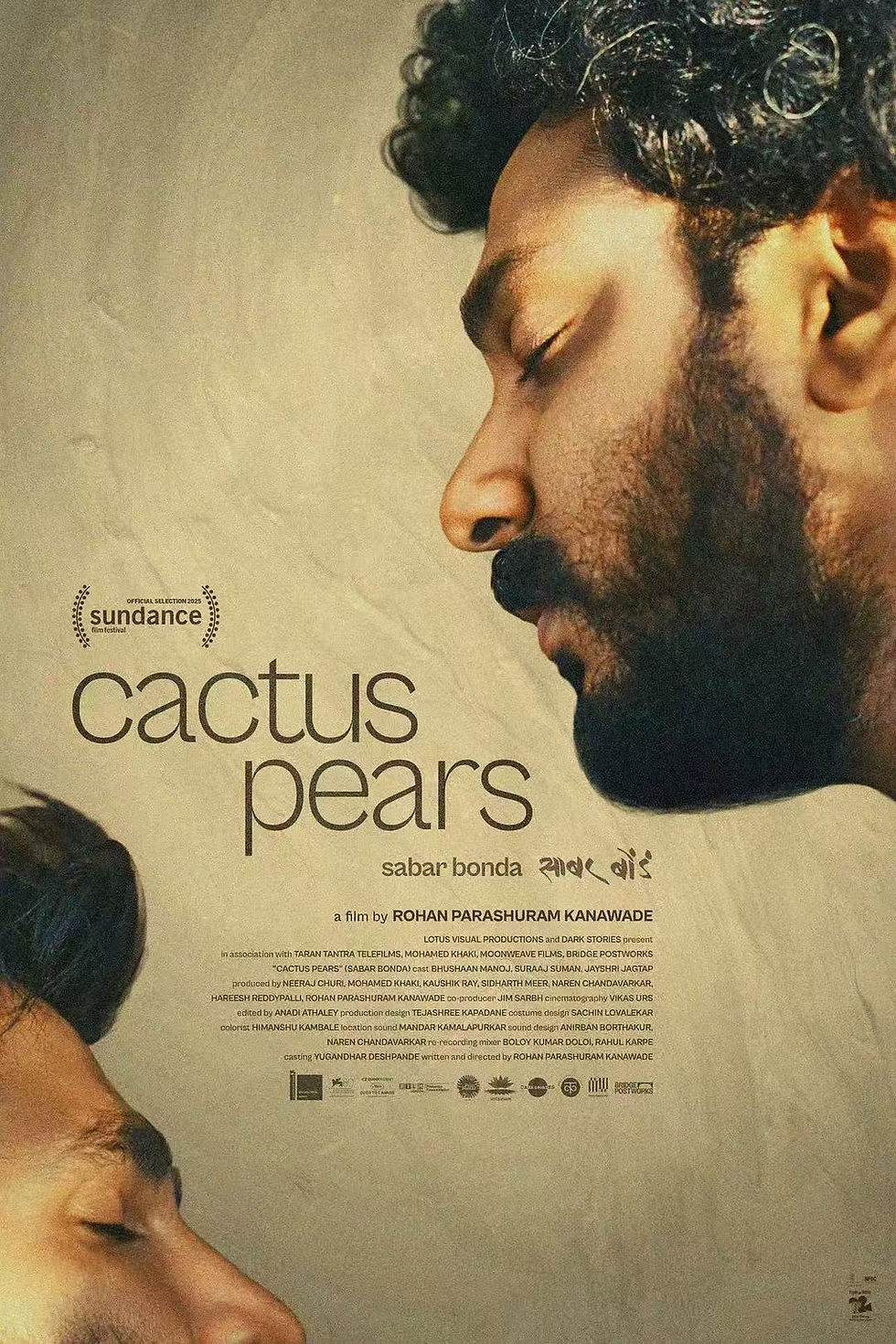
After his father’s death, Anand has to return to his village for ten days.
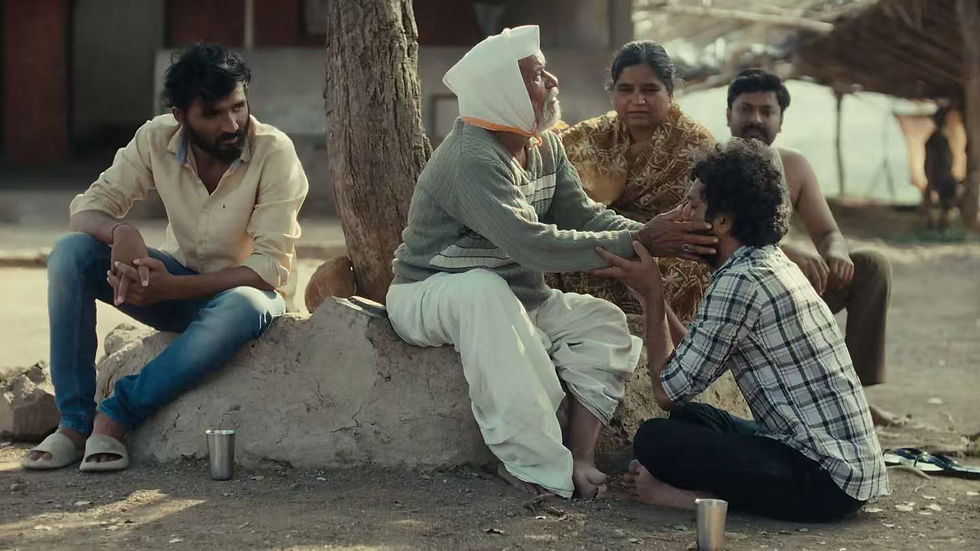
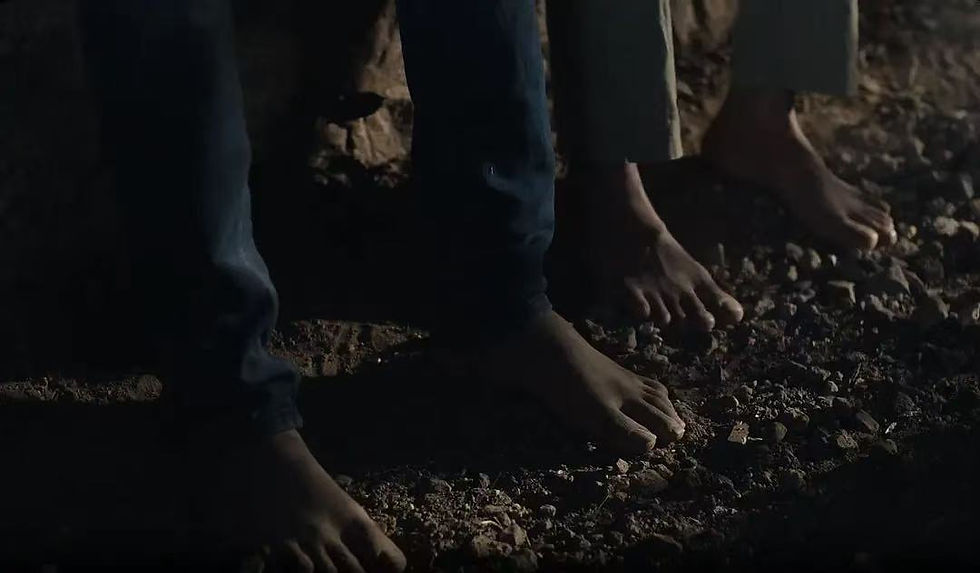
It is the rule. He cannot wear shoes, cut his hair or shave, and he must not go back to the city. He has to receive greetings, hugs and tears from every relative, along with the question that will come sooner or later: Isn’t it time you found a partner?
Anand works at a call centre in the city. In his thirties, he is unmarried and has no plan to marry. He never speaks out his reason, nor does he need to — that reason cannot be voiced where he lives.
He thinks these ten days are merely a ritual to get through.
Then he meets Balya.
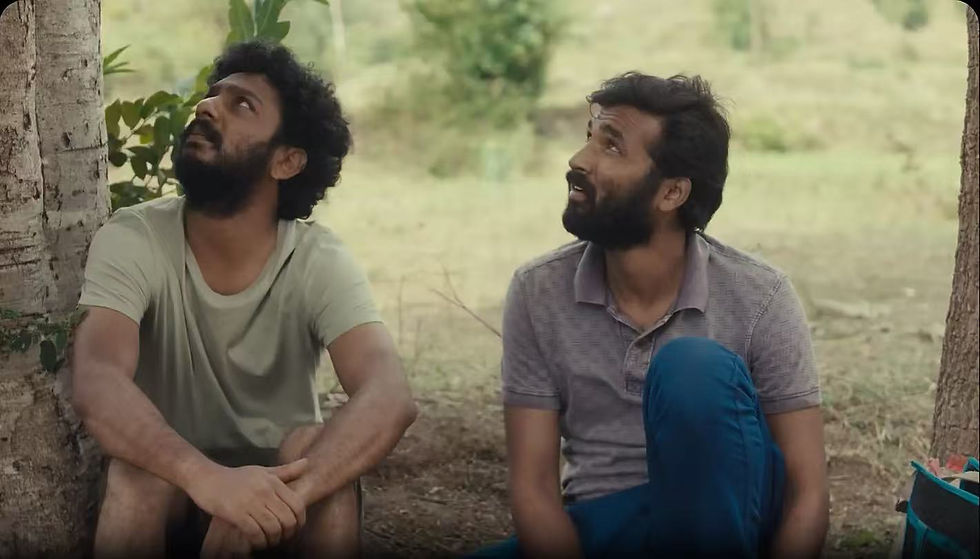
Balya is a farmer in the village, a few years younger than Anand. His family farm the land, and his relatives keep pushing him to go on arranged dates, which he keeps putting off. Their first meeting is ordinary: two villagers run into each other and start talking. But you soon sense a special ease between them — the kind of ease that only exists between certain people, requiring no explanation or performance.
Anand asks Balya: Are there other people “like us” in this village?
Balya thinks for a moment and replies, “If I am here, there will be others.”
I. Mourning Ritual and Traditional Discipline
In a creative talk, director Rohan Parashuram Kanawade states that he wants to show “how even ordinary cultural customs, when piled together, can turn into iron bars.” This line deserves careful consideration. There is no clear oppressor in the film, no villain deliberately making things hard for Anand. The relatives pushing him to marry love him in what they believe is the right way. The funeral rituals — no shoes, no haircuts, no leaving — are how the family has dealt with loss for hundreds of years. Not a single iron bar is forged only for him, yet together they form a seamless cage.
Sabar Bonda uses the ten-day mourning period as the narrative time frame. This choice itself is a statement: the mourning period is not just background; it is the pressure device itself. Anand’s situation is not some accidental cruelty, but a systemic norm. Normality is the hardest thing to shake. The film places him within this norm, leaving him no escape. It only gives him ten days, and the gaps between all those rules.
The caste system forms another invisible pillar of this structure. Anand and Balya share not just a secret about their sexual orientation, but also the common experience of coming from underprivileged backgrounds. Both grow up in positions where obedience is expected, taught from childhood that submission matters more than individual will. The film does not single out caste as a separate topic for discussion. Instead, it weaves it into the two characters’ daily behaviour, speech, and the unspoken understanding between them. These structural forces appear as the texture of daily life, rather than academic essays.
Anand’s father is almost an absent figure in the film. We only feel his weight through how others react to him. The son has never been his true self in front of his father. When the father passes away, that chance closes forever. This emptiness is not just grief over loss, but a specific form of regret. The film does not exaggerate this regret. It simply lets it rest beneath the story, as Anand carries it through those ten days.
II. Sabar Bonda: The Difficulty of Expressing Queer Intimacy
The film title comes from a plant. Sabar bonda, or cactus pear, is a common cactus fruit in rural India. It is covered in fine thorns on the outside, but sweet inside. It is real food in the film; the two pick and eat it, pricked by its thorns.
Yet it is also the core metaphor of the whole movie. Two people keeping secrets meet in a place full of rules. Their bond is sweet, wrapped in countless thorns: thorns of caste, of marriage, of tradition, of family, and of a society that refuses to accept their existence. To taste the sweetness, you have to bear the thorns first.
There is never an explicit confession scene between Anand and Balya. They do not say “I like you”, nor speak any words directly referring to sexual orientation, nor name their relationship. They talk about borrowing tools, picking fruit together, sitting side by side on the field ridge and letting silence speak. In interviews, Kanawade describes this approach as “circling around the truth”. Circumlocution is the only language they have. But this indirectness is neither cowardice nor deception. It is a survival skill people develop to draw close to one another under heavy restrictions. When there are no direct words available, they express themselves in other ways. When common forms of expression do not exist, they create a new grammar.
This difficulty of expression is mirrored in the film’s audio-visual language. Cinematographer Vikas Urs uses many static long takes, holding the two characters in the frame and letting conversations breathe through pauses and eye contact, without quick cuts. When speech is limited, silence carries the weight of words. In one scene, Balya picks cactus thorns off Anand’s clothes. They sit extremely close, and the camera stays still. Nothing happens, yet everything happens.
The film uses a 4:3 aspect ratio. Narrower and squarer than standard widescreen, it frames the two characters in an almost enclosed space. It highlights their togetherness as well as their isolation. This aspect ratio echoes the spatial pressure from the mourning period. Their world is small and cannot hold much, yet something still grows inside that tiny space.
III. The Coexistence of Grief and Desire
Placing mourning and the blooming of love within the same narrative frame is the film’s boldest and trickiest choice. These two emotions are usually seen as opposites: falling in love feels like betraying grief, or grief crushes all romance. The achievement of Sabar Bonda is that it makes you believe the two naturally live in the same room.
Anand’s emotional openness during mourning is no accident. His father’s death creates a special emptiness — not only the loss itself, but a hole opened by the regret of never being his true self before his father. This hole makes him more vulnerable and more willing to let things happen. In the city, he learns to protect himself with distance. The rules of the mourning period take away all escape routes. This forced presence unexpectedly opens him up.
Narratively, Balya acts as someone who “holds space” for Anand. He stays present, accepts Anand’s current state, without questioning, rushing, or demanding promises or identity labels. Everyone else in the film wants Anand to become a certain kind of person. Only Balya simply stays beside him. For a person living under long-term oppression, this simple companionship is already a rare gift.
Vikas Urs’ cinematography matches this idea perfectly. His shots are rough yet warm, like old photos or freshly washed soil. It neither beautifies nor brutalises, just shows things as they are: this land looks like this, these two people look like this, what happens between them looks like this. This honesty respects grief and desire equally, letting neither emotion serve the other.

IV. The Distance of Semi-autobiography
Kanawade clearly states this is a semi-autobiographical film. After his father died, during his mourning period, he went through experiences similar to Anand. He is a queer Marathi person from a rural background. He later studied in the city and then made this film.
This autobiographical root gives the film its most precious quality: this world is not imagined, but remembered. The funeral rituals, the way relatives ask questions, the unique rhythm of time and sense of space in village life — all of these have the precision only an insider can offer. It is not an outsider’s sensational observation of rural queer life in India.
Instead, it is made by someone who grew up there, looking back at where he comes from.
Still, he keeps necessary distance from his material. He does not turn the film into personal emotional release, nor a condemnation letter against hometown traditions. He is intimate enough to restore fine details of that world, and calm enough to see social structures within those details, beyond personal experience. This balance is what makes Sabar Bonda work.
Within the tradition of Indian queer cinema, Kanawade’s work occupies a special place.
Deepa Mehta’s Fire (1996) is widely regarded as a landmark, yet it was mainly made for English-speaking global audiences. For the next twenty years, queer stories in local languages for local Indian viewers remained rare. Shot in Marathi and set in rural western India, Sabar Bonda won a top award at Sundance and entered global viewership. It fills a double gap: gaps of class (rural, lower-caste backgrounds), and gaps of expression (local language, native emotional structures).
The film won the World Cinema Dramatic Grand Jury Prize at Sundance. It then reached international theatres and had its Indian release in September 2025. For a low-budget debut feature in Marathi, this path is unusual. Yet its existence and release in India show that something is slowly shifting — even if only a little, even if the thorns remain.

Conclusion
Sabar bonda grows in the harshest places: dry land, hot midday sun, surrounded by thorns. You would not expect to find sweetness there, yet the fruit grows there, waiting for someone to reach out, bear the thorns, and taste what lies inside.
On the tenth day of mourning, Anand must return to the city. The film handles this ending with great restraint. There is no loud farewell, no promises, no hug that fixes everything. Both men know what their separate lives are like. They know the iron bars are still there, and “the future” is a dangerous word.
This is all many people can get. Sabar Bonda promises nothing more. It only tells us: these ten days were real, this person was real, this love once truly existed. In a place where even indirect speech is a luxury, “having once been real” is already a kind of victory.


Comments