
Film Review: Filipiñana at Berlinale — Aesthetics of Violence on the Golf Course
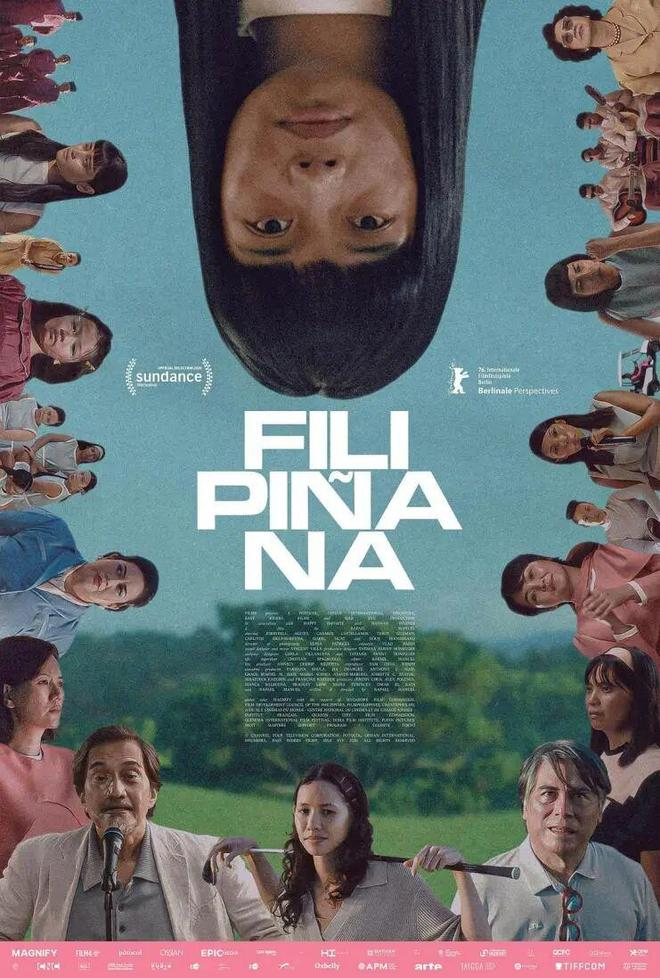
In the aesthetic lineage of Southeast Asian cinema, we often witness the overwhelming power of nature: the lush, mysterious rainforests captured by Apichatpong Weerasethakul, the dizzying sensation of being swallowed by vegetation as the camera ventures from cities into dense woods in Tropical Malady and Memoria.
Yet Filipino director Rafael Manuel’s debut feature Filipiñana paints a starkly contrasting picture. The film opens on the bustling, chaotic streets of Manila, where a minibus carrying Chinese tourists careens recklessly through traffic. The tour guide turns to the camera with a smile, teaching the audience to say “mabuhay” — a Tagalog greeting meaning “Welcome” or “Long live.”

This opening sets a trap of dual perspectives: the Orientalist gaze of tourists briefly intersects with the countervailing stare of local residents. The journey culminates at an artificial oasis: a golf course.
Adapted from Manuel’s 2020 Berlin Silver Bear-winning short film of the same title, the director expands the concise fable of the short into a two-hour feature, with Jia Zhangke serving as its producer.
The film unfolds through the observations of two women from opposite ends of the class spectrum: Isabel, a rural tee girl, and Clara, the niece of club president Palanca. Their gazes intersect, overlap, and diverge, weaving a powerfully symbolic grand allegory — the golf course stands as a miniature model mirroring colonial history and structural violence.
No other film pinpoints the violent nature of the golf course as precisely as Filipiñana. Here, sweltering heat functions as torture, while willful amnesia constitutes another form of violence entirely.
The Golf Course as an Engraving of Colonial Legacy
Industrialization and globalization reshape the natural landscape, leaving behind a total erasure of the land’s original form once outsiders depart.
The director laid bare his core argument in interviews: “Is a golf course not simply gentrification of land?” Vast natural landforms are bulldozed and remade into flawlessly smooth, manicured artificial greenery. It forms a closed ecological bubble stripped of past and future, defined solely by standardized uniformity — a device engineered for self-forgetting.
The film lingers on this stretch of lawn through countless framed static long takes. The hacking swing of sprinklers, amplified impact of golf clubs striking balls, and raucous chirping of cicadas interweave; the director sonically resurrects sounds of the land before its transformation, forging connections between memory, sensory perception, and emotion.
The Golf Course: A Stage for Elite Narcissism
Pouring immense wealth and labor to erase untamed nature and rebuild it as a giant private garden for leisure is, in itself, a ritual affirming social status.
The plight of tee girl Isabel renders this class violence tangible. She sits on a low stool at the driving range, with golfers swinging clubs inches from her knees, the crack of each shot roaring beside her at dangerously close range. The instant a ball flies away, she scrambles to set a new one, stiffening back into position. Male golfers’ legs frame the shot, trapping her in the center — the camera’s symbolism is unambiguous.
These girls in turquoise uniforms blend into the foliage like endless trees: when one withers, another is transplanted to take its place. If one collapses from extreme heat, a replacement immediately steps in.
Human lives here are disposable and renewable. Sweltering temperatures leave no room for reflection or resistance, allowing the vicious cycle of violence and erasure to perpetuate endlessly.
Floating, Unfixed Viewpoints
After drawing the audience into the golf course through the tourists’ eyes in the opening sequence, the film’s perspective shifts entirely to a scattered, drifting lens. Isabel’s first shot is a tight close-up of her face as she awakens, staring blankly and listlessly back at the camera.
The film has no steady, consistent viewpoint; its gaze drifts and skates restlessly, sometimes shifting to Clara — an upper-class woman educated in the US, who belongs to this space yet remains a cultural outsider observing it from within.
Likewise, the narrative rejects linear plot progression, instead constructed from loose, meandering vignettes: Isabel’s subtle quiet crush on Palanca, Palanca’s clandestine affair with his personal caddie, a comically plodding marching blind orchestra… When Isabel is tasked with returning a lost club, the camera holds on her hand suspended mid-air, frozen between hesitation and obedience, until she crushes a mango fallen from a branch beneath her fingers. These minor, unhurried fragments build a viscous, suffocating sense of time, wrapping viewers in the oppressive, near-dead heat.
This almost stagnant sensory experience is crafted through an abundance of framed static long takes. Beneath the lawn’s rippling heat and immaculate surface simmers persistent structural violence along lines of class and gender.
The film’s cruelty often lingers off-camera, caught only in peripheral vision. This formal strategy bears resemblance to Jonathan Glazer’s The Zone of Interest: direct depictions of brutality are walled off, while the camera fixates on its periphery, echoes, and empty voids left in its wake.
A missing girl is spoken of throughout Filipiñana, and only in the final act do we witness a discarded hair clip being picked up. Most of the film’s hidden violence hangs suspended as an absence, yet weighs heavier than any explicit image as the narrative’s most crushing presence.
Much like the victims in The Zone of Interest, whose fragmented remains — teeth, bones, ash, bloodstains — are scattered across the frame to testify to violence’s devastating aftermath, the invisible harm in Filipiñana haunts every scene.
The film’s most ambitious sequence unfolds as the end credits roll, a lengthy static shot stretching over several minutes. Audience members rise to leave, only to pause; far in the background, a girl can faintly be seen swimming toward something in the water.
Here, cinematic form itself becomes a mirror reflecting the dialectic of seeing and ignoring, presence and absence: within this meticulously manicured giant garden, who merits being seen? Whose voices get to be heard?
When we stand to exit the theater, do we ourselves become those disembodied tourists, missing the truly vital moments relegated to the margins of our vision?
Contrast with Apichatpong’s Tropical Malady
Turning to Apichatpong Weerasethakul’s Tropical Malady, we encounter an opposing dialectic of concealment and revelation.
When discussing the film, Benedict Anderson recounted an observation from his Dayak friend from Indonesia: “The jungle demands constant silence and focused listening, requiring you to move as soundlessly as possible. It can feel terrifying, yet the rainforest is also a strange, magical inner world you find yourself drawn to revisit again and again.” For Apichatpong, nature embodies an immense, mystical force, teeming with the wild vitality of tropical woodlands.
Filipiñana, however, reveals nature’s antithesis: this stretch of greenery is a manufactured, tamed, standardized product, a mechanism built for self-forgetting.
If characters in Tropical Malady venture deep into the jungle to reclaim their souls, those trapped in the artificial oasis of Filipiñana wander lost amid the echoes of class division and colonial history.
Anderson astutely noted that Bangkok’s middle class, who spend their days sealed in air-conditioned rooms, find Tropical Malady “difficult” and “mysterious,” for they “only consume films centered on people like themselves or those of higher social standing.”
Filipiñana, by contrast, forces audiences to confront how those privileged above them construct walled-off paradises, shunting suffering to the periphery of sight.


Comments